There is a specific, soul-warming magic that happens when a moroccan herb-stuffed flatbread hits a scorching hot cast-iron skillet. As the dough meets the heat, the thin-as-air layers begin to puff, separating into a thousand buttery sheets that shatter at the slightest touch. This isn’t just a recipe; it is a sensory journey through the vibrant street stalls of Marrakech, brought directly into your home kitchen.
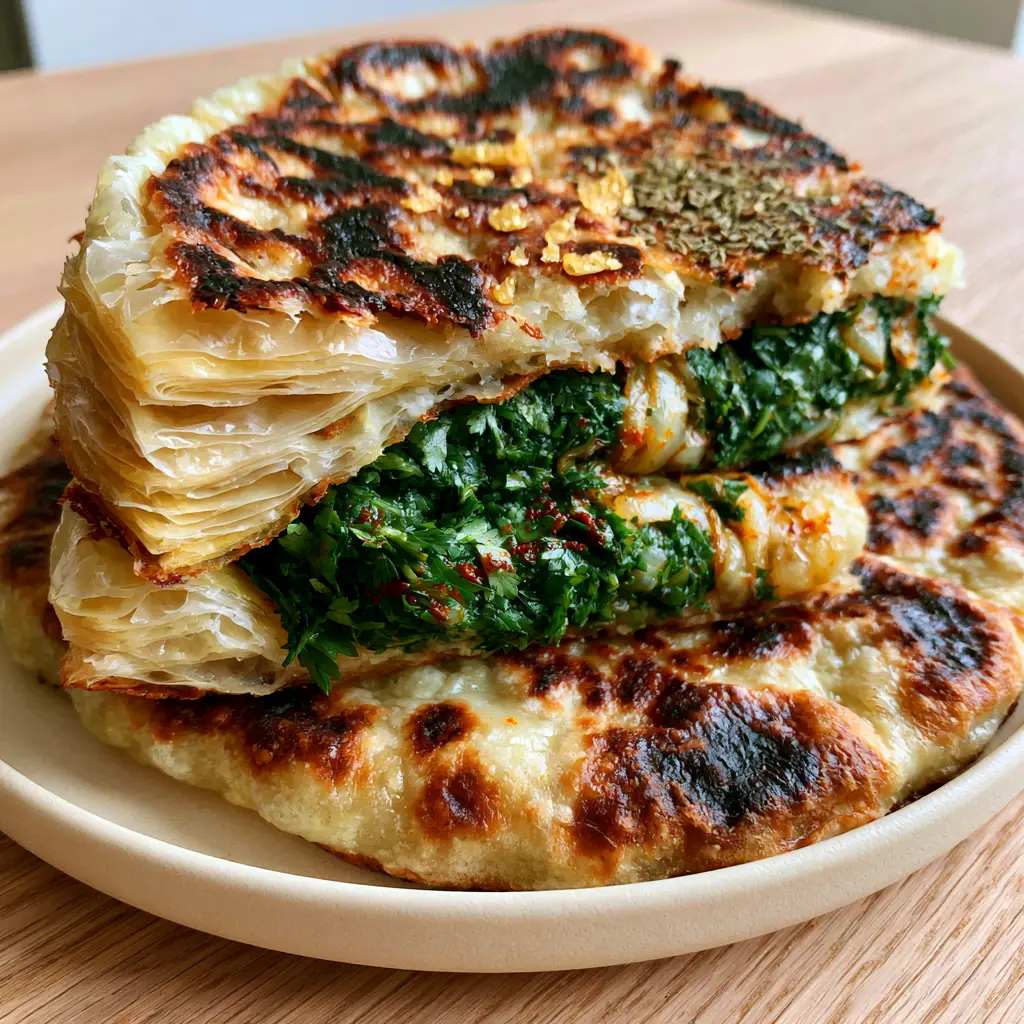
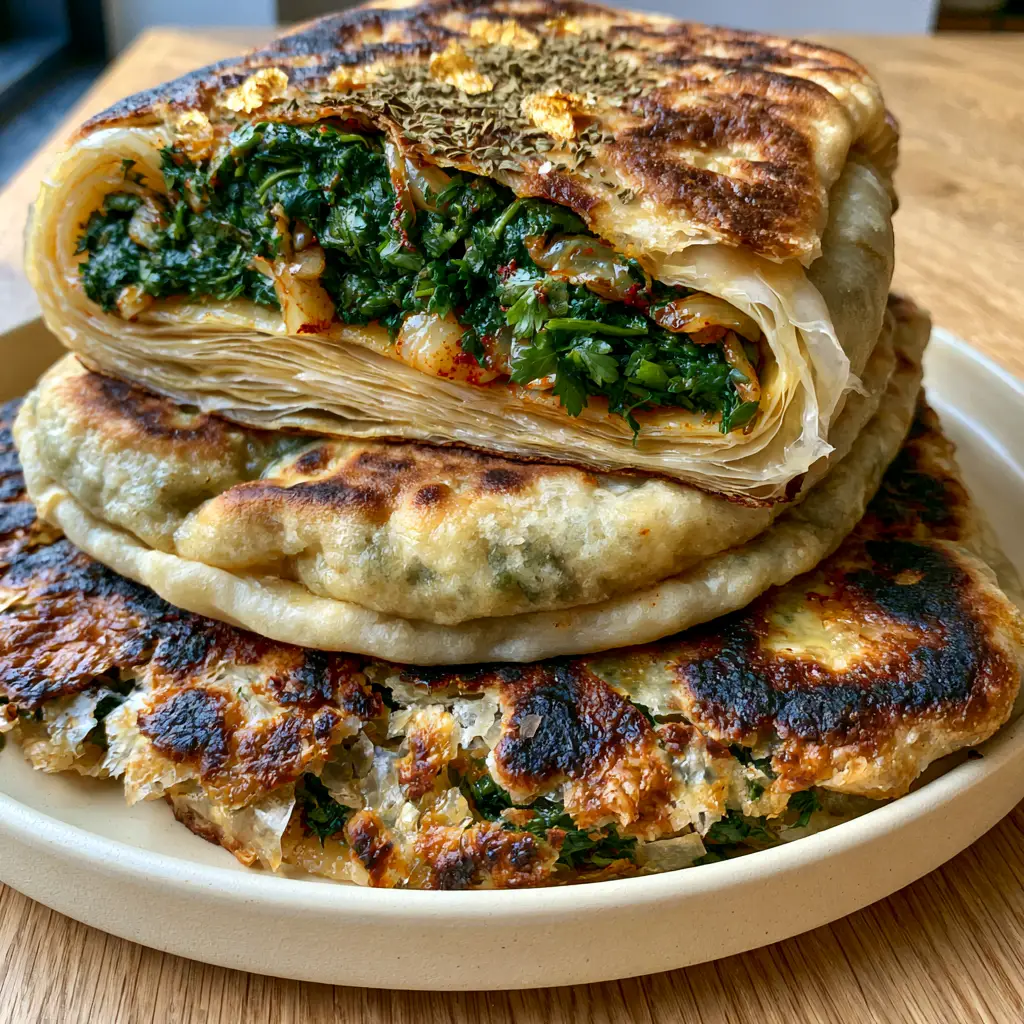
Our version of this classic Msemmen focuses on the “Forensic Visual” details: a vibrant emerald green interior packed with fresh herbs, contrasted against a deeply charred, golden-brown exterior. Whether you are serving this for a luxurious weekend brunch or a savory snack, the combination of melted salted butter and red paprika oil creates a flavor profile that is both earthy and indulgent. You can even pair it with a light Mediterranean quinoa salad for a complete meal.
Every bite offers a structural masterpiece. The “shattered” crust gives way to a translucent, oily sheen of pastry that has been meticulously folded with toasted semolina dust. This technique ensures that the layers remain distinct and tender, never gummy. If you have ever craved a handheld meal that feels both rustic and refined, this moroccan herb-stuffed flatbread is the answer you have been searching for.
The Anatomy of the Perfect Shattered Crust and Emerald Filling
To achieve the specific visual and textural results seen in our professional culinary blueprint, we focus on three core pillars: gluten elasticity, herb density, and the Maillard reaction. This moroccan herb-stuffed flatbread relies on a dough that can be stretched until it is nearly invisible, a feat made possible by the inclusion of fine semolina and precise hydration.
- The Lamination Secret: We use a combination of melted salted butter and a bespoke red paprika oil between every fold. This ensures the “paper-thin, buttery, translucent layers” described in our visual guide.
- The Emerald Core: Unlike other flatbreads that use dried herbs, we utilize a dense, finely minced mixture of fresh parsley and cilantro. This creates a “vibrant emerald green” filling that pops against the golden dough.
- The Char Factor: High-heat searing in a cast iron skillet produces those signature “deep golden-brown charred spots,” adding a smoky dimension to the buttery pastry.
- The Finishing Touch: A final dusting of dried oregano and flaky sea salt provides the crystalline texture that makes the first bite so memorable.
The Essential Pantry Staples for Laminated Moroccan Dough
Creating a moroccan herb-stuffed flatbread requires high-quality, foundational ingredients. While the blueprint specifies the visual elements, the culinary science requires these specific measurements to ensure the dough behaves correctly during the stretching process.
All-Purpose Flour: 3 cups (375g). This provides the primary structure and protein needed to develop the gluten network that holds the layers together without tearing.
Fine Semolina: 1 cup (160g). This is the secret to the “toasted semolina dust” effect, adding a subtle crunch and preventing the layers from fusing into one solid mass.
Warm Water: 1.25 cups (300ml). The temperature is critical; warm water relaxes the gluten immediately, making the dough much easier to stretch into translucent sheets.
Melted Salted Butter: 0.5 cup (115g). We use salted butter to enhance the savory notes of the herbs, providing the “oily sheen” and rich mouthfeel characteristic of high-end pastry.
Fresh Parsley & Cilantro: 2 cups (60g) total, finely minced. This creates the dense green filling. Ensure they are bone-dry before mincing to avoid a soggy interior.
White Onions: 2 medium (200g), finely diced. Sautéing these until translucent before adding them to the filling ensures a sweet, mellow flavor that doesn’t overpower the herbs.
Smoked Paprika & Neutral Oil: 2 tbsp (30ml) oil + 1 tsp (2g) paprika. This creates the “red paprika oil” mentioned in the blueprint, giving the inner layers a sunset-orange hue and a hint of warmth.
Flaky Sea Salt & Dried Oregano: 1 tsp (5g) each. These are your visual “hero” ingredients, applied at the very end to catch the light and provide a final burst of seasoning.
Must-Have Equipment for Masterful Flatbread Folding
To replicate the “handheld smartphone photo” aesthetic, you need the right tools to achieve professional-grade results. You don’t need a bakery-grade kitchen, but a few specific items will make the process of creating a moroccan herb-stuffed flatbread much smoother.
First, a Large, Clean Work Surface. You will need ample space to stretch the dough into a large rectangle. A granite or marble countertop is ideal because it stays cool, though a large wooden table works beautifully if well-oiled.
Second, a Heavy Cast Iron Skillet. This is non-negotiable for achieving the “deep golden-brown charred spots.” Cast iron retains heat better than stainless steel, ensuring an even sear across the entire surface of the flatbread.
Third, a Sharp Bench Scraper. This helps in dividing the dough evenly and cleaning up any stubborn bits of oiled dough from your workspace. Consistency in size is key for even cooking times.
Mastering the Art of Folding for Infinite Buttery Layers
The process of making a moroccan herb-stuffed flatbread is as much about technique as it is about ingredients. Follow these steps to ensure your Msemmen looks exactly like the “shattered, flaky crust” in our visual prompt.
Step 1: Developing the Elastic Dough Base
In a large bowl, whisk together the flour, 0.5 cup (80g) of the semolina, and a pinch of salt. Gradually add the warm water while kneading. You are looking for a dough that is soft and slightly tacky but not sticky.
Knead the dough for at least 10 minutes by hand (or 6 minutes in a stand mixer). You will know it is ready when it is smooth and elastic. Divide the dough into 8 equal balls, coat them lightly in oil, and let them rest for at least 30 minutes. Resting is the most important step; it allows the gluten to relax so you can stretch it into “paper-thin” layers later.
Step 2: Preparing the Emerald Herb & Paprika Filling
While the dough rests, prepare your filling. Heat 1 tbsp (15ml) of oil in a pan and sauté the white onions until they are translucent and soft. In a small bowl, mix the remaining oil with the smoked paprika to create your “red paprika oil.”
In a separate bowl, combine the finely minced parsley and cilantro with the sautéed onions. Ensure the mixture is well-incorporated. This dense green paste will be the heart of your moroccan herb-stuffed flatbread. If you enjoy bold flavors, you could even serve this alongside chicken tinga for a unique fusion dinner.
Step 3: The Stretching and Lamination Process
Oil your work surface generously. Take one dough ball and flatten it with your palm. Using oiled hands, gently pull the edges outward, working from the center, until the dough is a large, translucent square. You should be able to see the countertop through it.
Brush the surface with a thin layer of the red paprika oil and a drizzle of melted salted butter. Sprinkle a tablespoon of the herb-onion mixture across the center and lightly dust with the remaining toasted semolina. The semolina acts as a physical barrier, ensuring the layers stay “dozens of paper-thin” sheets rather than clumping.
Step 4: The Signature Square Fold
Fold the top third of the dough down to the center, and the bottom third up over it, creating a long rectangle. Brush again with butter. Now, fold the left side to the center and the right side over it to form a square. This double-folding technique creates the “translucent layers of dough” revealed when the flatbread is torn.
Repeat this with all dough balls. Let the folded squares rest for another 10 minutes before the final sear. This second rest ensures the dough doesn’t spring back when you press it out for the pan.
Step 5: Searing for the Shattered Crust Effect
Heat your cast iron skillet over medium-high heat. Gently flatten a folded square with your fingers until it has doubled in size. Place it in the hot pan. You should hear a distinct sizzle immediately—this is the sound of the butter frying the outer layer into a “shattered crust.”
Cook for 2-3 minutes per side. Look for the “deep golden-brown charred spots” and wait until the flatbread puffs up with steam. The steam is a visual cue that the internal layers are separating perfectly. Once finished, transfer to a matte cream ceramic plate and immediately top with flaky sea salt and dried oregano.
Expert Tips for the Ultimate Flaky Msemmen Success
- Oil is Your Best Friend: Never be afraid of using too much oil on your hands or work surface. It prevents the dough from sticking and tearing while you stretch it to that critical translucent thickness.
- The “Windowpane” Test: Before resting your dough, pull a small piece. If it stretches thin enough to see light through it without breaking, your gluten is perfectly developed.
- Heat Management: If the flatbread browns too quickly without puffing, turn the heat down slightly. The “steam” mentioned in the prompt requires enough heat to evaporate the moisture between the layers.
- Avoid Overfilling: It’s tempting to pile on the herbs, but a “dense, vibrant emerald green” look is achieved through fine mincing, not volume. Too much filling will cause the layers to tear.
The Best Ways to Store and Reheat Your Flatbreads
This moroccan herb-stuffed flatbread is at its absolute peak when served fresh and steaming. However, you can store leftovers in an airtight container for up to 3 days in the refrigerator. To maintain the “shattered crust,” avoid the microwave, which will make the pastry rubbery.
For the best results, reheat in a dry skillet over medium heat for 1-2 minutes per side. This recrisps the outer layers and melts the interior butter. You can also freeze these flatbreads; simply place parchment paper between each one and store in a freezer bag. They can be cooked directly from frozen in a covered skillet at low heat.
Creative Pairings: What to Serve with Herb-Stuffed Flatbread
This versatile moroccan herb-stuffed flatbread pairs beautifully with a variety of global flavors. For a fresh contrast, serve it alongside a crisp Mexican street corn salad or a bowl of esquites. The acidity of the lime and the sweetness of the corn cut through the richness of the buttery pastry.
If you’re serving this as part of a larger dinner spread, it makes an excellent accompaniment to grilled meats like steak kabobs or Thai-style ground pork skewers. The herbaceous filling complements the charred notes of grilled protein perfectly. For a sweet finish to your meal, consider a tropical dessert like a mango crepe cake to mirror the layered theme of the bread.
Frequently Asked Questions
You can replace up to 50% of the all-purpose flour with whole wheat, but the layers will be less translucent and the texture will be slightly denser and nuttier.
Traditional Msemmen like this version does not require yeast. The ‘rise’ and flakiness come from the steam trapped between the butter-laminated layers as they hit the hot skillet.
Use only fresh parsley and cilantro, and ensure they are very finely minced. Sautéing the onions first ensures they don’t release too much moisture, keeping the herb color bright and ’emerald green.’
The secret is twofold: resting the dough properly to relax the gluten and using a combination of oil and fine semolina between the layers. The semolina prevents the layers from fusing during the folding process.
This usually happens if the dough wasn’t stretched thin enough or if you didn’t use enough butter/oil during the folding. Ensure the dough is translucent before folding to get that shattered crust.
Authentic Moroccan Herb-Stuffed Flatbread (Msemmen) Recipe
Moroccan Herb-Stuffed Flatbread: The Ultimate Guide to Flaky, Layered Msemmen
Ingredients
Equipment
Method
- Combine flour, 0.5 cup semolina, and water. Knead for 10 minutes until smooth and elastic.
- Divide into 8 balls, oil them, and rest for 30 minutes to relax the gluten.
- Sauté onions until translucent. Mix with minced herbs. Create red paprika oil by mixing oil and paprika.
- Stretch dough ball until translucent. Brush with butter and paprika oil. Add herb mixture and a dust of semolina. Fold into a square.
- Flatten squares and sear in a hot cast iron skillet for 2-3 minutes per side until golden-brown charred spots appear.
- Top with flaky sea salt and dried oregano while hot.
Notes
A heavy cast iron skillet is the best tool for a shattered, flaky crust.
Bring the Flavors of Morocco to Your Kitchen
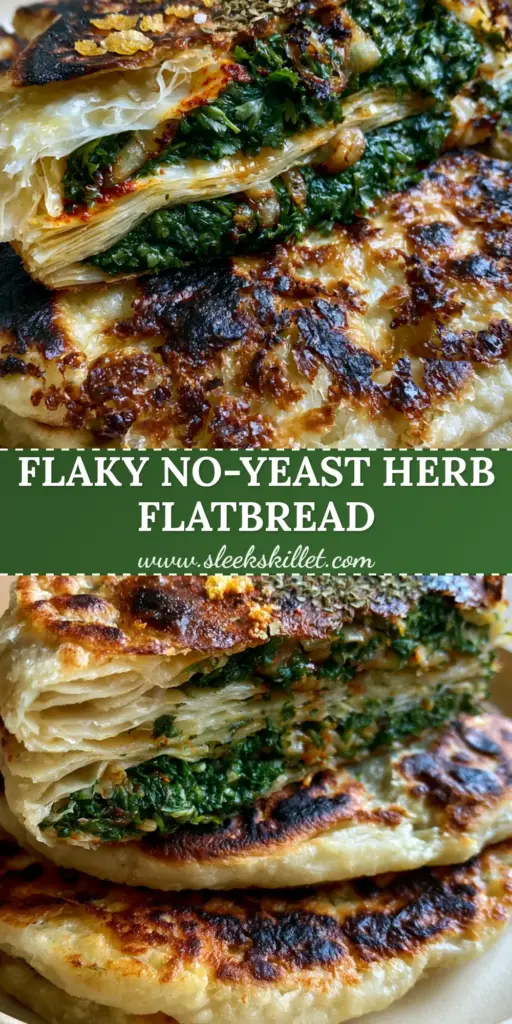
Creating this moroccan herb-stuffed flatbread is a rewarding culinary project that yields professional, bakery-quality results. With its shattered crust, translucent layers, and vibrant emerald herb filling, it is a dish that tastes as impressive as it looks. The contrast of the “oily sheen” and the “deep golden-brown charred spots” makes it a centerpiece for any table.
We invite you to share your results with us! Did you achieve those paper-thin layers? Let us know in the comments below. For more visual inspiration and recipe ideas, follow us on Pinterest and save this recipe to your favorite boards. Happy cooking!