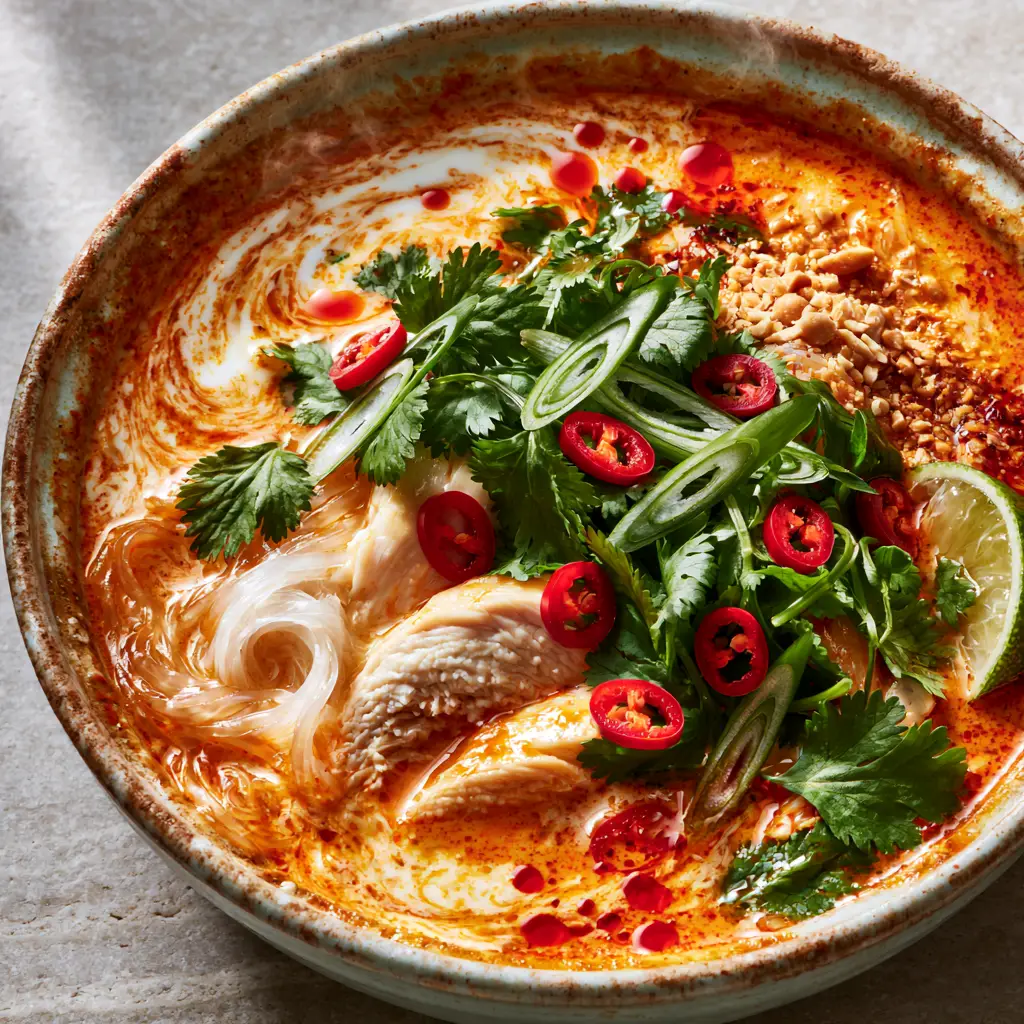
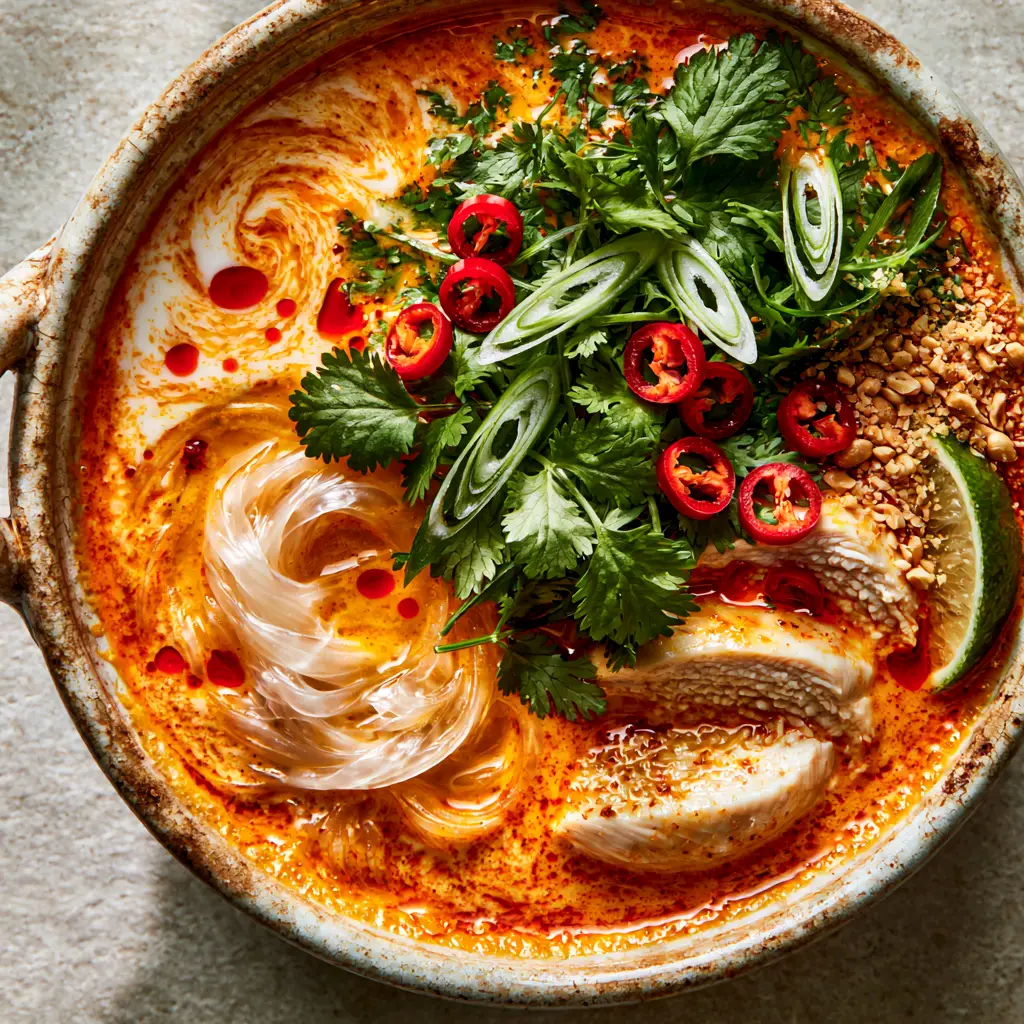
There is nothing quite like the first spoonful of a perfectly balanced Thai red curry noodle soup. Imagine a rustic ceramic pot, heavy and warm in your hands, filled to the brim with a vibrant orange-red coconut broth that carries a hint of natural morning light. The surface is a landscape of culinary art, featuring swirls of creamy white coconut milk and shimmering droplets of crimson chili oil that promise a deep, layered heat.
This recipe isn’t just about feeding your hunger; it is about recreating a specific sensory experience. We are aiming for that ultra-appetizing, high-quality look you’d find in a professional food photographer’s portfolio—glossy broth, translucent silky noodles, and vibrant garnishes that pop against a neutral stone background. Whether you are looking for a comforting weeknight meal or a show-stopping dish for guests, this soup delivers on every level.
By following this guide, you will master the art of poaching chicken to tender perfection and balancing the bold, spicy notes of red curry paste with the velvet richness of full-fat coconut milk. Let’s dive into the aromatics and techniques that make this Thai red curry noodle soup an absolute staple in any home cook’s repertoire.
Why You Will Crave This Silky Thai Noodle Bowl
- The Broth Texture: A thick, glossy, orange-red base achieved by properly “frying” the curry paste to release essential oils before emulsifying with coconut milk.
- Visually Stunning Garnishes: A contrast of bright green cilantro, diagonal scallions, and brilliant red bird eye chilies that make the dish look as good as it tastes.
- Perfectly Poached Protein: Slices of chicken breast that are juicy and tender, never rubbery, thanks to a gentle simmering technique.
- The Crunch Factor: A final dusting of crushed roasted peanuts provides the essential textural counterpoint to the silky rice noodles.
The Anatomy of an Authentic Thai Red Curry Noodle Soup
To achieve the specific visual blueprint of this dish, every ingredient must serve a dual purpose: flavor and aesthetics. We aren’t just making soup; we are building layers of taste and color.
Thai Red Curry Paste: This is the heartbeat of your Thai red curry noodle soup. Look for a brand that uses dried red chilies, lemongrass, and galangal to ensure that deep orange-red hue seen in our visual guide.
Full-Fat Coconut Milk: 2 cans (800ml) are essential for that creamy, opaque finish. The high fat content allows for those beautiful white swirls on the surface that contrast so well with the red broth.
Thin Rice Noodles: Use 8oz (225g) of dried rice noodles. When soaked correctly, they become translucent and silky, picking up the broth’s color without becoming mushy.
Chicken Breast: 1 lb (450g) of boneless, skinless breast. We poach this directly in the liquid to infuse the meat with ginger and garlic notes while keeping the exterior “clean” for slicing.
Bird Eye Chilies: These provide the “brilliant red rounds” mentioned in our visual prompt. They add a sharp, clean heat that cuts through the richness of the coconut milk.
Roasted Peanuts: 1/4 cup (35g) of crushed peanuts. Do not skip these; they are the secret to the “ultra-appetizing” close-up shot, adding a rustic, earthy texture.
Foundational Aromatics: You will also need 1 tbsp (15ml) of neutral oil for searing, 2 tsp (10g) of kosher salt for seasoning, and 1 tbsp (15g) of palm sugar to balance the saltiness of the fish sauce.
Essential Kitchen Tools for This Recipe
To recreate the rustic look of the ceramic pot in our imagery, you’ll need a few specific tools. A heavy-bottomed Dutch oven or a traditional ceramic soup pot is best for maintaining even heat.
A sharp chef’s knife is non-negotiable for achieving those thin diagonal slices of scallions and perfectly round chili rings. You will also need a fine-mesh strainer to rinse your rice noodles and a whisk to incorporate the coconut milk swirls smoothly.
How to Construct the Perfect Thai Red Curry Noodle Soup
Searing the Aromatics and Frying the Paste
Heat 1 tbsp (15ml) of oil in your pot over medium heat. Add 3 tbsp of red curry paste and cook for 2-3 minutes, stirring constantly until it turns a shade darker and the oil begins to separate.
This process, known as “cracking the cream” or frying the paste, is what creates that vibrant orange-red color. You should smell the lemongrass and toasted chilies filling your kitchen—a clear sensory cue that the base is ready.
Building the Glossy Coconut Base
Pour in 1.5 cans (600ml) of the coconut milk, reserving the rest for the final garnish swirls. Add 3 cups (720ml) of high-quality chicken stock and 2 tbsp (30ml) of fish sauce.
Bring the liquid to a gentle simmer. You are looking for a thick, glossy consistency that coats the back of a spoon. The surface should be shimmering with tiny red oil droplets even before we add the finishing oil.
Poaching the Chicken for Maximum Tenderness
Submerge the whole chicken breasts into the simmering broth. Reduce the heat to low; you want to see only the occasional bubble breaking the surface.
Cook for 12-15 minutes until the internal temperature reaches 165°F (74°C). Remove the chicken and let it rest for 5 minutes before slicing into thin, juicy strips that will look beautiful nestled atop the noodles.
Preparing the Silky Rice Noodles
While the chicken rests, place your rice noodles in a heat-proof bowl and cover with boiling water. Let them sit for 5-8 minutes until they are translucent and silky but still have a slight “bite.”
Drain them immediately and divide them among four bowls. If you leave them in the water too long, they will lose that “silky white” appearance and become gummy.
Expert Tips for a Professional-Grade Presentation
- The Swirl Technique: To get those “visible swirls of creamy white coconut milk,” wait until the soup is in the bowl. Use a teaspoon to drizzle the reserved coconut milk in a circular motion.
- Chili Oil Droplets: If your curry paste isn’t oily enough, add a few drops of store-bought red chili oil at the very end to get that shimmering, “ultra-appetizing” look.
- Diagonal Slicing: Always cut your scallions on a sharp 45-degree angle. This increases the surface area and makes the garnish look more sophisticated, just like in a restaurant.
- Tucking the Lime: Place the lime wedge slightly off-center, tucked into the side of the pot. This adds a pop of bright yellow-green that makes the reds and oranges of the broth stand out.
The Best Pairings for Your Red Curry Feast
While this Thai red curry noodle soup is a complete meal on its own, it pairs beautifully with other vibrant textures. If you are hosting a larger dinner, consider serving it alongside some Thai-style ground pork skewers for a protein-packed side.
If you want to lean into the spicy-sweet flavor profile, a fresh and crunchy Mexican street corn salad or even some esquites can provide a surprising but delicious fusion of flavors. For those looking for a lighter, plant-based companion, these 30-minute vegetarian meals offer great inspiration for quick sides.
Storage and Reheating Guidelines
If you have leftovers, store the broth and the noodles in separate containers. Rice noodles are like sponges; if they sit in the broth overnight, they will absorb all the liquid and turn into mush.
The broth will stay fresh in the refrigerator for up to 4 days. When reheating, do so on the stovetop over medium heat. Do not let it reach a rolling boil, as this can cause the coconut milk to break and lose its creamy appearance.
Frequently Asked Questions
Yes, you can control the heat by reducing the amount of red curry paste or removing the seeds from the bird eye chilies used as a garnish.
For the best visual results and richness, use canned full-fat coconut milk. Carton milk is often too thin and won’t produce the creamy white swirls.
Poach the chicken at a very low simmer rather than a boil. Using a meat thermometer to pull it at exactly 165°F ensures it remains juicy.
Generally, yes! Rice noodles and coconut milk are gluten-free, but always check your red curry paste and fish sauce labels to ensure no hidden wheat is present.
Thin or medium-width rice noodles are traditional and best for soaking up the broth while maintaining a silky texture.
The Ultimate Thai Red Curry Noodle Soup Recipe
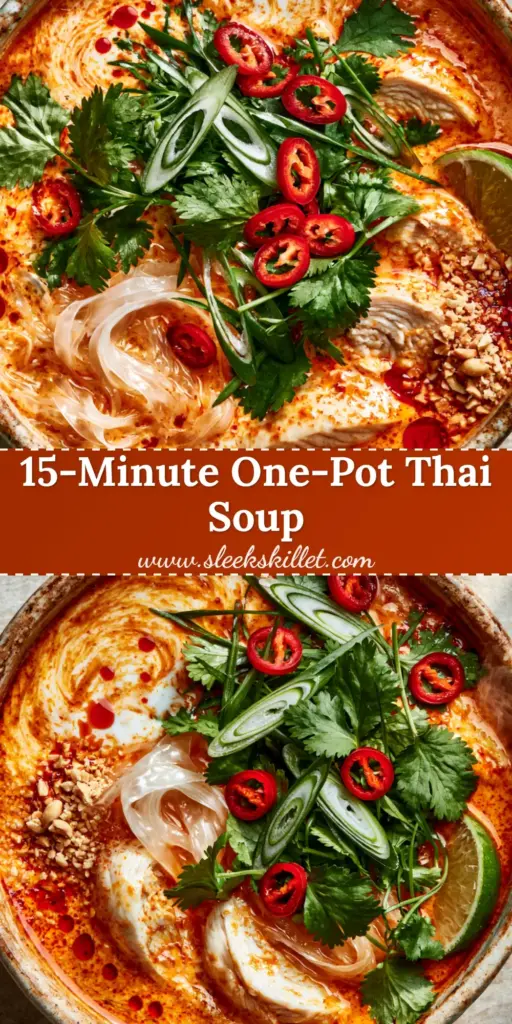
Thai Red Curry Noodle Soup with Creamy Coconut Broth and Poached Chicken
Ingredients
Equipment
Method
- Heat oil in a pot and fry the red curry paste for 2-3 minutes until fragrant and oil begins to separate.
- Stir in coconut milk (reserve 1/4 cup), chicken stock, fish sauce, and sugar. Bring to a gentle simmer.
- Add chicken breasts to the broth and poach for 12-15 minutes until 165°F. Remove and slice.
- In a separate bowl, soak rice noodles in boiling water for 5-8 minutes until silky and translucent. Drain.
- Place noodles in bowls, top with sliced chicken, and pour over the hot broth. Drizzle reserved coconut milk and chili oil droplets. Garnish with cilantro, scallions, chilies, peanuts, and a lime wedge.
Notes
Ensure you reserve a bit of coconut milk to create the signature white swirls on top.
Join the Toast Pantry Community!
We hope this Thai red curry noodle soup brings a bit of vibrant, spicy joy to your kitchen table. There is something truly special about mastering a dish that looks as professional as it tastes. If you enjoyed this recipe, please leave a comment below and let us know how your coconut milk swirls turned out!
Don’t forget to sign up for our newsletter for more culinary blueprints and “forensic” recipe guides. You can also save this recipe to your favorite boards on Pinterest so you never lose track of this weeknight favorite.