When it comes to authentic Italian recipes, few dishes capture the soul of Rome quite like a perfectly executed rigatoni in a vibrant, emulsified tomato sauce. There is a specific magic that happens when the starchy pasta water meets high-quality extra virgin olive oil and hand-crushed tomatoes, creating a sauce that doesn’t just sit on the pasta, but lacquers it.
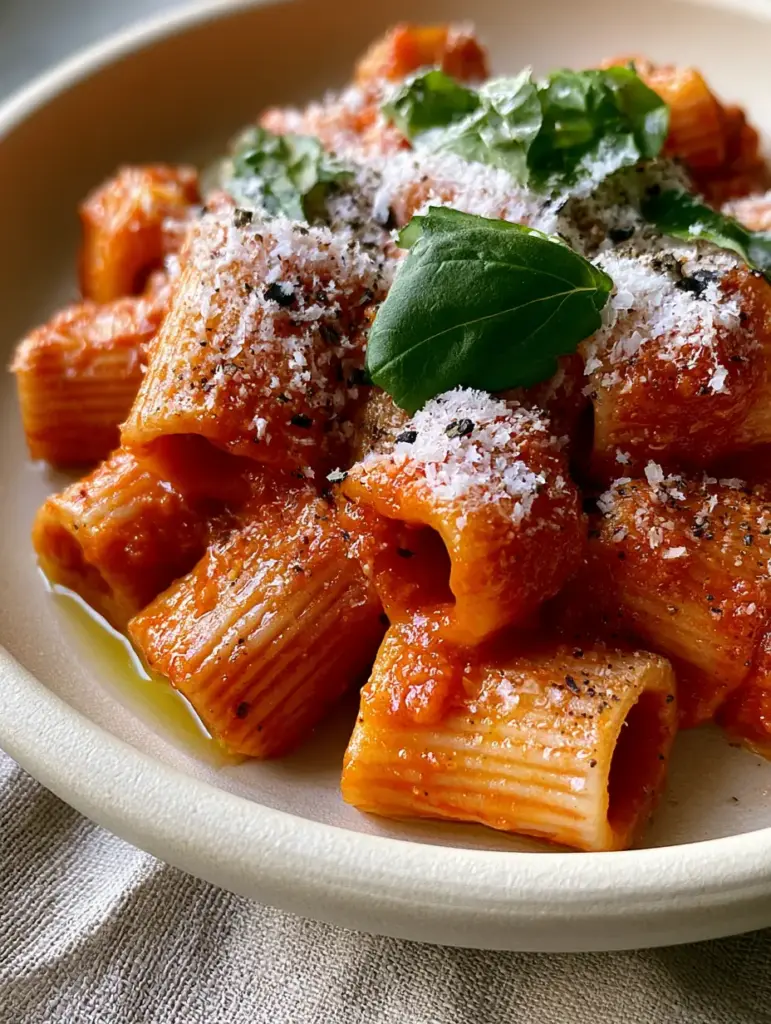
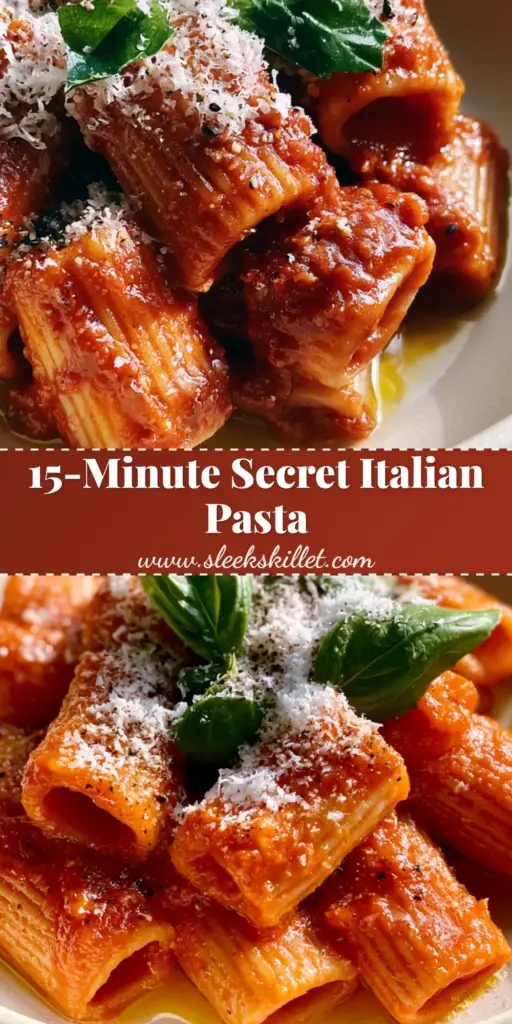
Imagine a shallow, matte cream ceramic bowl filled with rigatoni tubes, their visible ridges acting as tiny canyons for a thick, glossy bright red sauce. Every bite offers the resistance of a perfect al dente texture, accented by the snowy dusting of aged Pecorino Romano and the aromatic punch of torn fresh basil leaves.
This recipe focuses on the technique of mantecatura—the process of finishing the pasta in the pan to achieve that professional, specular highlight sheen seen in high-end Roman trattorias. Whether you are a seasoned chef or a home cook looking for authentic Italian recipes, this masterclass in emulsification will elevate your kitchen repertoire.
The Visual and Textural Elements of a Perfect Roman Pasta
- Perfectly Al Dente Rigatoni: The pasta must maintain its structural integrity, providing a firm bite that stands up to the heavy, clinging sauce.
- Emulsified Sauce Sheen: A bright red, glossy finish that features specular highlights, achieved through the scientific marriage of starch and fat.
- Snowy Pecorino Dusting: Finely grated aged Pecorino Romano provides a sharp, salty contrast to the sweetness of the tomatoes.
- Fresh Aromatic Garnish: Vibrant deep green torn basil leaves and coarse grinds of cracked black pepper for an immediate sensory lift.
- The Golden Drizzle: A final touch of extra virgin olive oil that pools slightly in the curves of the pasta, enhancing the mouthfeel.
Sourcing Ingredients for Authentic Italian Recipes
To achieve the result shown in our visual guide, you must select ingredients that behave correctly under heat. While we often look for simple weeknight meals, this specific dish relies on the quality of its few components.
Rigatoni Pasta (1 lb / 454g): Look for bronze-cut pasta. The rougher surface area is essential for the sauce to cling to every ridge and curve.
San Marzano Tomatoes (28 oz / 800g): These provide the bright red color and low acidity required for a sauce that looks as good as it tastes. Hand-crush them for a rustic, authentic texture.
Aged Pecorino Romano (1 cup / 100g): This sheep’s milk cheese is saltier and sharper than Parmesan, providing the essential “Roman” flavor profile. It must be finely grated to achieve that “snowy” visual effect.
Extra Virgin Olive Oil (4 tbsp / 60ml): Use a high-quality, cold-pressed oil. Part of it is for the base, and the rest is for that final, golden pool of flavor.
Fresh Basil Leaves (1/2 cup / 10g): Always tear the basil by hand. Cutting it with a knife can bruise the leaves and darken the vibrant deep green color.
Foundational Seasonings: You will need 2 tsp (12g) of sea salt for the pasta water and 1 tsp (2g) of coarse cracked black pepper. A single clove of garlic (5g), smashed, provides a subtle aromatic base without overpowering the tomato.
Essential Tools for the Mantecatura Technique
To master authentic Italian recipes, your equipment matters as much as your ingredients. You will need a large pasta pot to allow the rigatoni to move freely without sticking.
A wide, heavy-bottomed stainless steel skillet or sauté pan is mandatory for the emulsification phase. The wide surface area allows the sauce to reduce quickly while providing enough room to toss the pasta vigorously to develop the starch.
Mastering the Glossy Emulsion: A Step-by-Step Guide
Preparing the Vibrant Tomato Base
In your wide skillet, add 2 tbsp (30ml) of extra virgin olive oil and the smashed garlic clove over medium heat. Sauté the garlic until it becomes fragrant and turns a pale golden color, then remove it—we only want the infused essence.
Carefully pour in the hand-crushed San Marzano tomatoes. Simmer over medium-low heat for 15-20 minutes until the sauce thickens and the color intensifies into a bright, deep red. If you enjoy fresh tomato-based dishes, you will recognize the moment the raw smell disappears and the sweetness emerges.
Achieving the Perfect Al Dente Texture
While the sauce simmers, bring a large pot of water to a rolling boil. Add your sea salt; the water should taste like the sea. Drop the rigatoni and stir immediately to prevent sticking.
Cook the pasta for exactly 2 minutes less than the package instructions for “al dente.” The pasta should still have a slightly white, chalky center—it will finish cooking in the sauce to absorb maximum flavor.
The Art of the Mantecatura
Before draining the pasta, reserve 1 cup (240ml) of the starchy pasta water. This is your “liquid gold.” Transfer the undercooked rigatoni directly into the skillet with the tomato sauce.
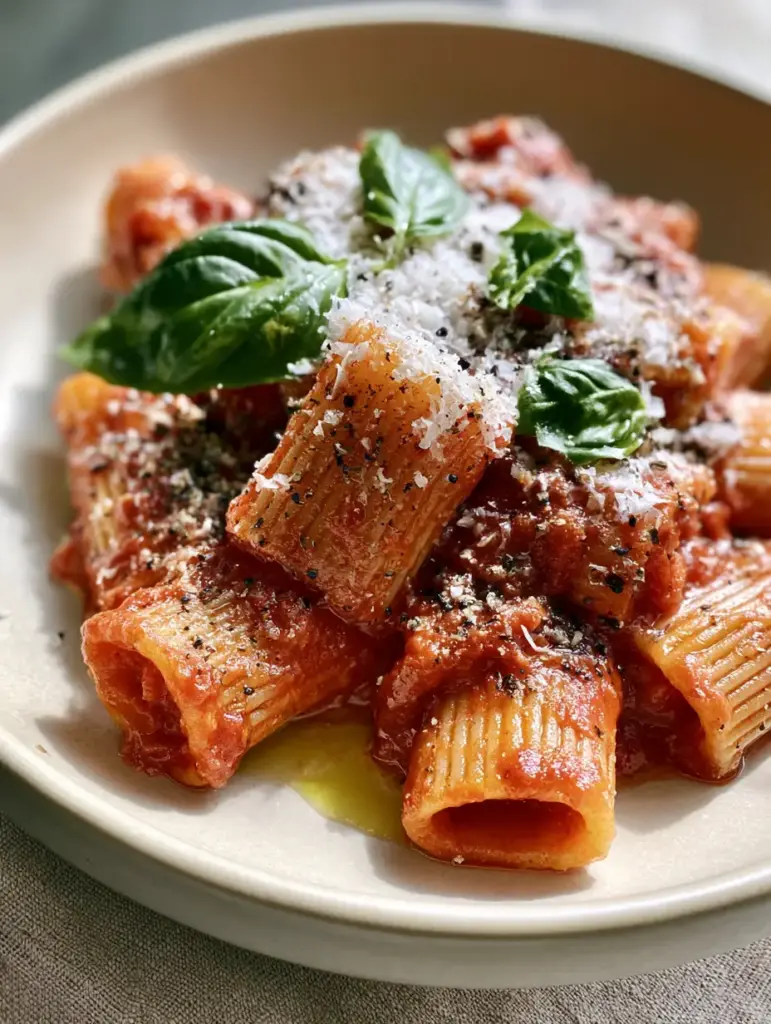
Increase the heat to medium-high and add half of the pasta water. Vigorously toss or stir the pasta. Watch for the visual cue: the sauce will begin to transform from a simple liquid into a thick, glossy coating that clings to the ridges of the rigatoni.
The Final Flourish and Garnish
Remove the pan from the heat. This is crucial—adding cheese to a boiling pan can cause it to clump. Sprinkle in half of the finely grated Pecorino Romano and the remaining drizzle of olive oil.
Toss one last time until the cheese disappears into the sauce, creating those beautiful specular highlights. Plate the pasta in a matte bowl, then top with a generous snowy dusting of the remaining cheese, the torn basil leaves, and the coarse cracked black pepper.
Expert Secrets for Restaurant-Quality Pasta
- Temperature Control: Never boil the sauce once the cheese is added, or you will lose that emulsified smoothness.
- The Water Ratio: Add the reserved pasta water in small increments. You want enough to create a “cream,” but not so much that it becomes a soup.
- Pepper Freshness: Only use freshly cracked black pepper. Pre-ground pepper lacks the volatile oils that provide the floral aroma seen in authentic Italian recipes.
- Tear, Don’t Chop: Tearing the basil releases the oils differently than a clean knife cut, resulting in a more rustic and aromatic dish.
Storage and Reheating Advice
This dish is best served immediately to enjoy the glossy emulsion. However, if you have leftovers, store them in an airtight container in the refrigerator for up to 2 days.
To reheat, avoid the microwave. Place the pasta back in a skillet with a splash of water or additional tomato sauce. Heat gently over medium-low, tossing constantly to re-emulsify the fats and starches.
What to Pair with Your Roman Rigatoni
This rich and savory pasta pairs beautifully with a light, crisp side. If you are looking for a balanced meal, consider a fresh spinach salad with a simple lemon vinaigrette.
For those who prefer a bit more variety in their authentic Italian recipes, serving this alongside boldly seasoned pastas at a dinner party can provide a wonderful contrast in flavor profiles. Finish the evening with something sweet, like these decadent swirl muffins.
Common Questions About Roman Pasta
While you can, Pecorino Romano is traditional for Roman recipes. It is saltier and tangier, providing a specific flavor profile that defines authentic Italian recipes from this region.
Al dente translates to ‘to the tooth.’ For rigatoni, it means the pasta should be firm when bitten, with a slight resistance in the center, rather than being soft or mushy.
The secret is emulsification. By tossing undercooked pasta in the sauce with starchy pasta water and fat (like olive oil or cheese) over heat, you create a stable, shiny emulsion that clings to the pasta.
Bronze-cut pasta has a rougher, more porous surface compared to Teflon-cut pasta. This texture is essential for allowing the emulsified tomato sauce to grip and coat every ridge.
Tearing basil leaves by hand prevents the blades from crushing the delicate herb, which can cause oxidation and browning. Tearing keeps the leaves vibrant green and releases aromatic oils more naturally.
The Ultimate Authentic Roman Rigatoni Recipe
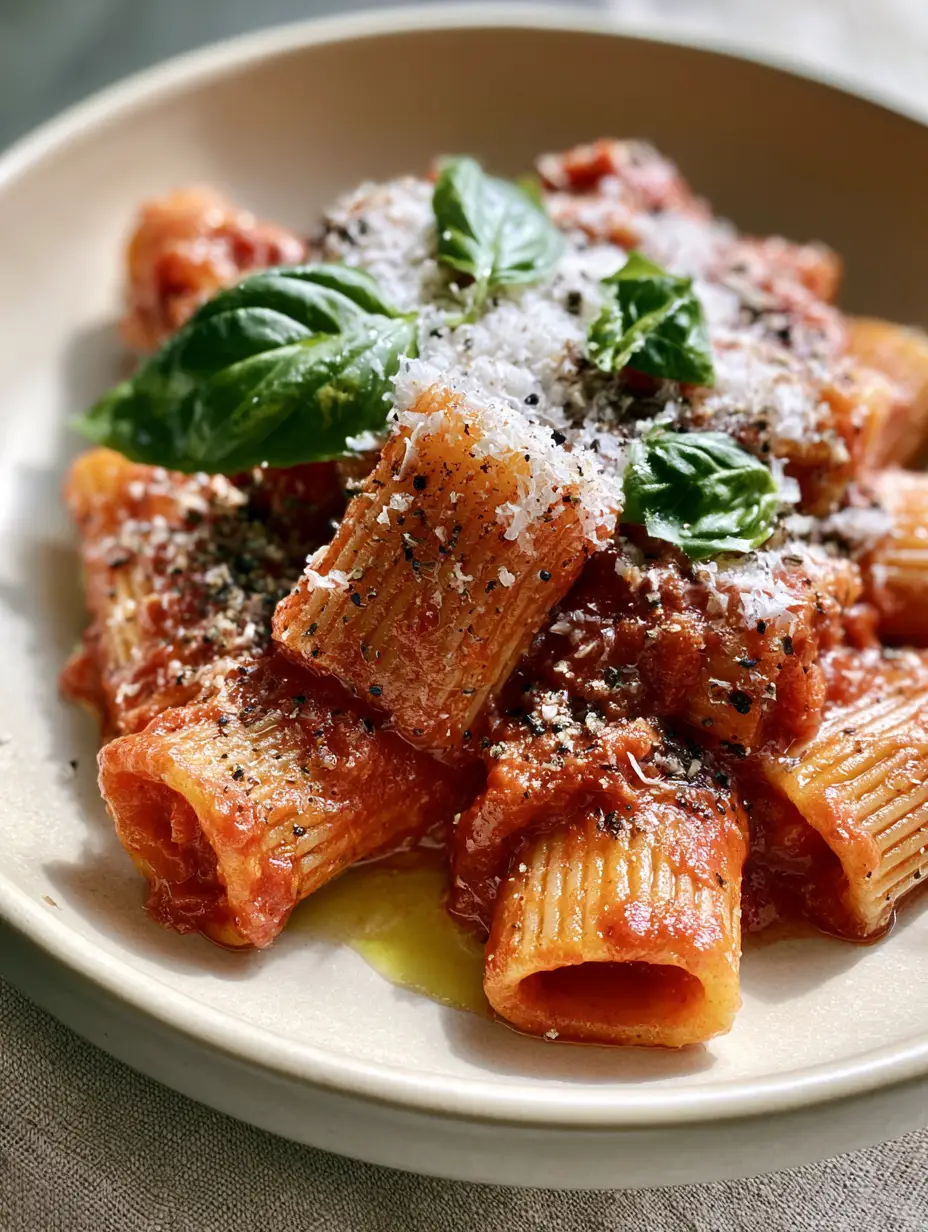
Authentic Italian Recipes: The Ultimate Roman Rigatoni with Glossy Tomato Sauce
Ingredients
Equipment
Method
- Heat 2 tbsp (30ml) of EVOO in a wide skillet over medium heat. Sauté the smashed garlic clove until golden and fragrant, then remove and discard.
- Add hand-crushed tomatoes to the skillet. Simmer for 15-20 minutes until the sauce turns a bright, deep red and thickens.
- In a large pot of salted water, boil rigatoni for 2 minutes less than the package directions. Reserve 1 cup (240ml) of pasta water before draining.
- Add the undercooked pasta to the skillet with the tomato sauce and a splash of pasta water. Toss vigorously over medium-high heat until the sauce is glossy and emulsified.
- Remove from heat. Fold in half of the Pecorino and the remaining EVOO. Plate in a ceramic bowl and top with snowy cheese, torn basil, and cracked black pepper.
Notes
Tearing the basil by hand prevents the leaves from bruising and keeps them vibrant green.
Bring the Taste of Rome to Your Kitchen
This rigatoni is a testament to the power of high-quality ingredients and proper technique. By mastering the emulsion of tomato and olive oil, you bring a piece of Italian culinary history to your dining table. We would love to see your glossy pasta creations! Share your photos and tag us on Pinterest, and don’t forget to sign up for our newsletter for more authentic Italian recipes delivered straight to your inbox.