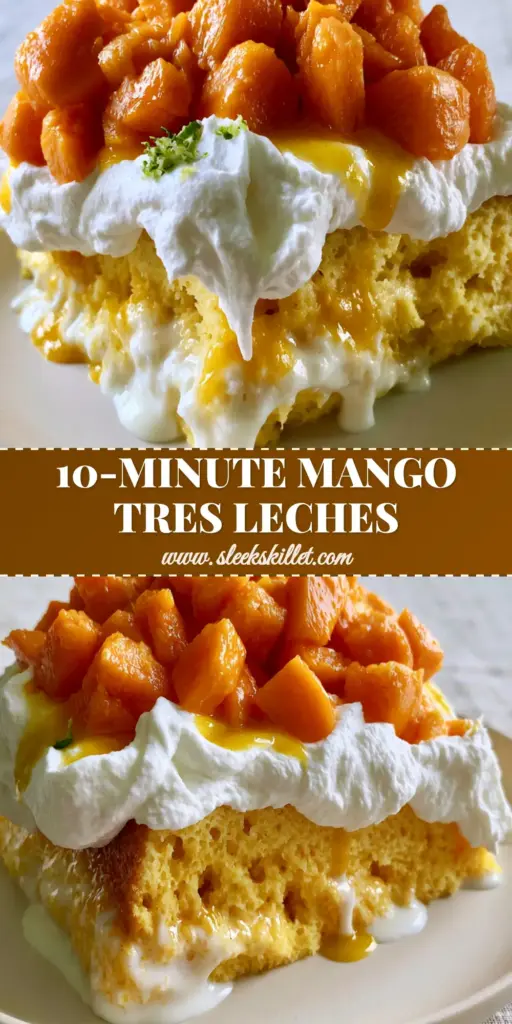
There is nothing quite like the first bite of a perfectly executed mango tres leches cake. Imagine a dense, golden-yellow sponge that has been meticulously saturated with a silky trio of milks, until every pore of the cake glistens with moisture. This isn’t just a dessert; it is a structural marvel of culinary physics where the cake acts as a vessel for a rich, mango-infused cream soak.
When you look at this cake, you see a striking contrast of textures. A thick, billowy layer of fresh white whipped cream sits atop the moist base, crowned with a vibrant mountain of hand-diced, juicy orange Alphonso mango chunks. To finish, a golden mango puree drizzle and a whisper of fresh lime zest provide a bright, citrusy counterpoint to the deep sweetness of the condensed milk. This recipe brings that exact smartphone-perfect visual to your kitchen table.
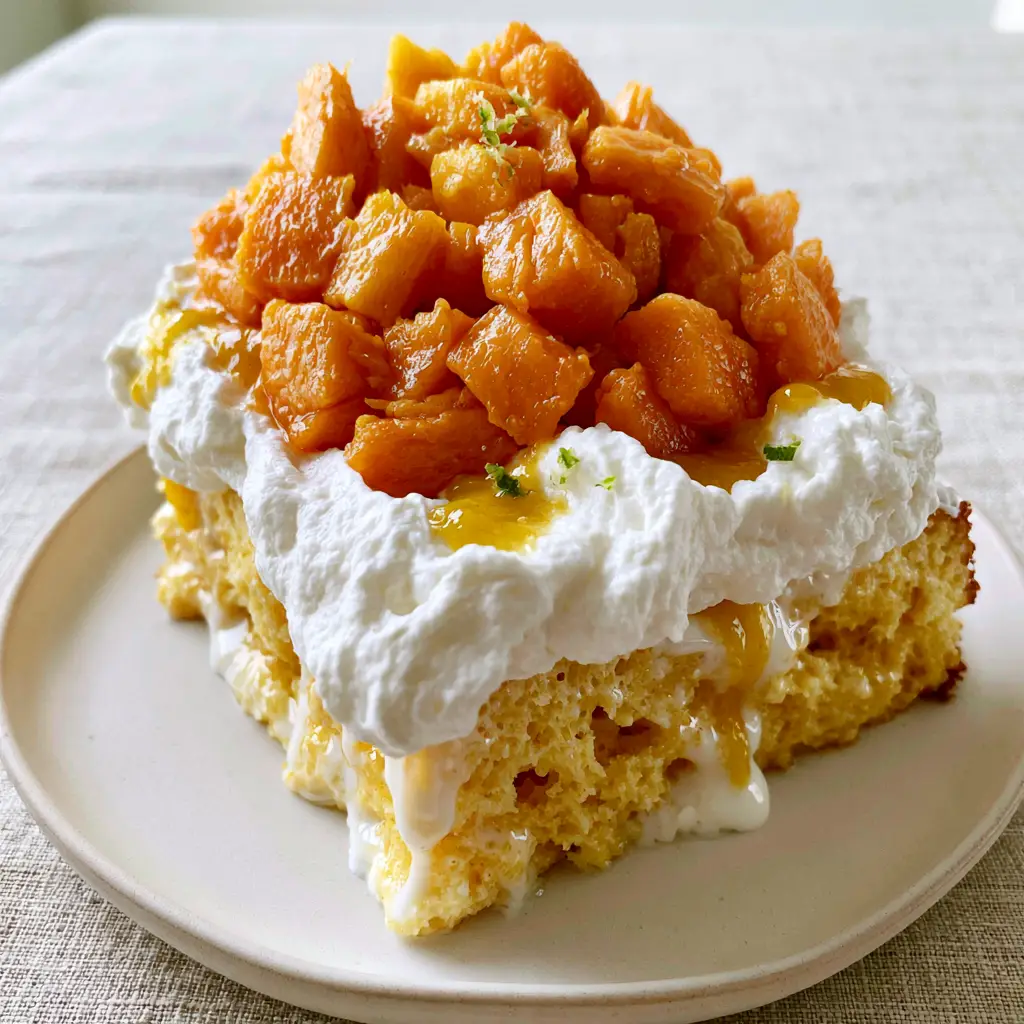
The Anatomy of the Ultimate Mango Tres Leches Cake
- Unmatched Moisture Profile: Unlike standard cakes, this sponge is engineered to absorb nearly twice its weight in liquid, resulting in a “moisture-heavy” texture that melts on the tongue.
- Alphonso Mango Gold Standard: By using ripe Alphonso mangoes, we achieve a deep orange hue and a honey-like sweetness that inferior varieties simply cannot match.
- Triple-Milk Saturation: A precise blend of sweetened condensed milk, evaporated milk, and heavy cream creates the signature “saturated” look where the milk slightly drips from the layers when sliced.
- Zesty Brightness: The addition of fresh lime zest cuts through the richness of the dairy, providing an essential aromatic lift.
Essential Ingredients for a Golden Mango Sponge
Every ingredient in this mango tres leches cake serves a forensic purpose to ensure the final dish matches our visual blueprint. From the specific protein content of the flour to the ripeness of the fruit, here is what you need.
All-Purpose Flour: 1.5 cups (190g). This provides the necessary structure to hold a massive amount of liquid without turning the cake into mush.
Large Eggs (Separated): 5 units. The yolks provide that characteristic golden-yellow color, while the whipped whites create the porous “sponge” texture required for absorption.
Granulated Sugar: 1 cup (200g). Sugar not only sweetens but also tenderizes the crumb, ensuring a soft mouthfeel.
Whole Milk: 1/3 cup (80ml). Used in the initial batter to create a smooth, pourable consistency before baking.
Baking Powder: 1.5 tsp (7g). This is a foundational “invisible” ingredient that ensures the cake rises enough to create air pockets for the milk soak.
Salt: 1/4 tsp (1.5g). A pinch of salt is vital to balance the intense sweetness of the condensed milk soak.
Vanilla Extract: 1 tbsp (15ml). Enhances the floral notes of the mango and the richness of the cream.
The Signature Mango Milk Soak
Sweetened Condensed Milk: 1 can (14oz / 397g). This provides the “saturated” look and the thick, syrupy sweetness that defines a classic tres leches.
Evaporated Milk: 1 can (12oz / 354ml). It offers a concentrated milky flavor without the water content of regular milk, helping the cake stay dense yet moist.
Heavy Cream: 1/2 cup (120ml). Adds fat and velvetiness to the soak, ensuring the cake glistens when cut.
Mango Puree: 1/2 cup (120ml). Whisked directly into the milk blend to ensure the mango flavor penetrates the very heart of the sponge.
Toppings for Visual and Flavor Impact
Heavy Whipping Cream (Cold): 2 cups (480ml). This must be whipped to stiff peaks to create the “thick, billowy” topping seen in our blueprint.
Powdered Sugar: 3 tbsp (30g). Stabilizes the whipped cream so it holds its shape under the weight of the mangoes.
Ripe Alphonso Mangoes: 2-3 large fruits. Diced into uniform 1/2-inch cubes for that dense, vibrant orange pile on top.
Fresh Lime Zest: 1 tsp. Scattered at the very end to provide a pop of green and a hit of acidity.
Mango Puree (for Drizzle): 1/4 cup (60ml). A final golden drizzle that ties the visual elements together.
Professional Tools for Success
To achieve the professional results of an elite food blog, you will need a 9×13 inch (23x33cm) baking pan, ideally glass or ceramic, to show off the saturated layers. A stand mixer or electric hand mixer is non-negotiable for whipping the egg whites to the correct volume. Finally, a bamboo skewer or a large fork is required to poke the “saturation holes” that allow the milk to penetrate the dense sponge.
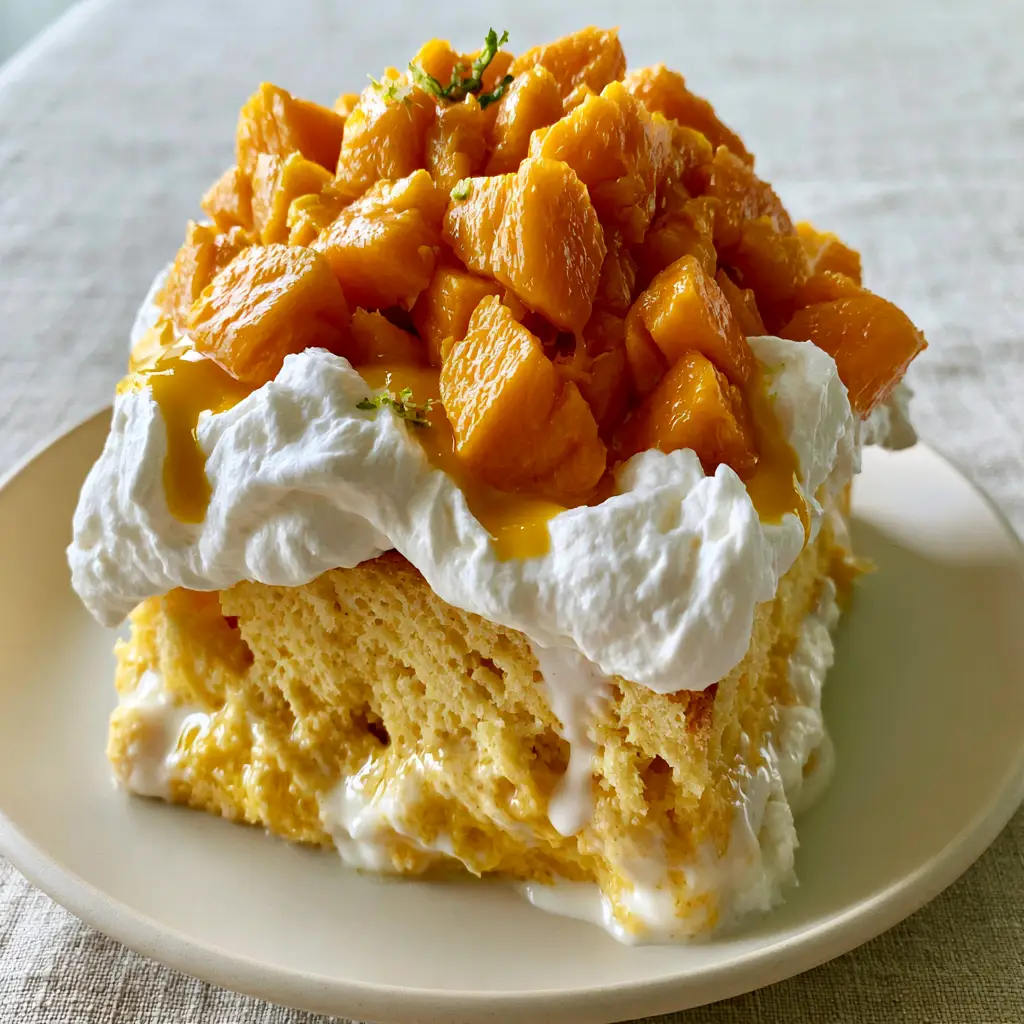
Step-by-Step Evolution of a Mango Masterpiece
Crafting the Golden Sponge Base
Preheat your oven to 350°F (175°C) and grease your baking pan. In a large bowl, whisk the egg yolks with 3/4 cup (150g) of sugar until they are pale yellow and double in volume. Stir in the milk and vanilla extract.
In a separate, perfectly clean bowl, whip the egg whites until soft peaks form. Gradually add the remaining 1/4 cup (50g) of sugar while continuing to whip until the whites are stiff and glossy. Gently fold the dry ingredients into the yolk mixture, then fold in the egg whites. The batter should look airy and light. Pour into the pan and bake for 25-30 minutes until the top is a light golden-brown and a toothpick comes out clean.
The Art of the Deep Saturation Soak
While the cake is still slightly warm, use a skewer to poke holes across the entire surface, about 1/2 inch apart. Whisk together the condensed milk, evaporated milk, heavy cream, and the 1/2 cup of mango puree. Slowly pour this mixture over the cake. You will see the liquid pool at first, but it will slowly be pulled into the porous sponge. Allow the cake to cool completely, then refrigerate for at least 4 hours—preferably overnight—to achieve that “moisture-heavy” texture.
Achieving the Billowy Whipped Topping
In a chilled bowl, whip the heavy cream and powdered sugar until stiff, billowy peaks form. Spread this thick layer over the chilled cake using an offset spatula. Do not smooth it out too much; the “billowy” look comes from the natural peaks created by the whisk.
The Final Garnish and Assembly
Pile the hand-diced Alphonso mangoes in the center of the cake, letting them spread slightly toward the edges. Take your remaining mango puree and use a spoon to create a zig-zag drizzle over the fruit. Finally, zest a fresh lime directly over the cake. The tiny green flecks against the bright orange mango and white cream create a stunning visual contrast.
Expert Tips for the Perfect Tres Leches
- The Overnight Rule: A mango tres leches cake is a patient dessert. The “glistening” milk effect only happens after the sponge has had 8-12 hours to fully hydrate.
- Temperature Control: Ensure your whipping cream is ice-cold before beating. This ensures the fat globules stay stable, giving you that thick, cloud-like texture.
- Mango Quality: If Alphonso mangoes are out of season, Ataulfo (Honey) mangoes are the best substitute due to their lack of fiber and intense sweetness.
- Sponge Integrity: Do not over-mix the batter once the flour is added. You want the air bubbles to remain intact so the cake can act like a literal sponge.
Serving Suggestions and Menu Pairings
This tropical delight is the perfect conclusion to a vibrant Mexican-inspired feast. Start your meal with a refreshing Mexican Street Corn Salad or a bowl of smoky Esquites. For the main course, consider serving Chicken Tinga tacos or savory Steak Kabobs to provide a salty contrast to the sweet cake.
If you are hosting a mango-themed brunch, this cake pairs beautifully with other tropical treats like a Mango Crepe Cake or a light Mango Mousse Cake. For a fun beverage pairing, try a Passion Fruit Martini or a simple chilled glass of horchata.
Frequently Asked Questions
Yes! In fact, it is better when made 24 hours in advance. This allows the milk mixture to fully penetrate the center of the sponge for that signature glistening look.
Yes. Each milk serves a purpose: condensed milk for sweetness and viscosity, evaporated milk for concentrated flavor, and heavy cream for a rich, glistening finish.
Ensure the cake is completely cold before topping, and use powdered sugar in your whipped cream, as the cornstarch in the sugar acts as a stabilizer to keep the cream billowy.
Alphonso mangoes are the gold standard due to their honey-like sweetness and lack of fiber. If they are unavailable, Ataulfo (also known as Honey or Champagne mangoes) are the best substitute.
Sogginess occurs if the sponge is too light or if the cake hasn’t had enough time to chill. A proper tres leches requires a dense sponge and at least 4-8 hours of refrigeration to achieve the correct ‘moisture-heavy’ texture.
The Ultimate Mango Tres Leches Recipe Card
Mango Tres Leches Cake with Fresh Alphonso Mango and Lime Zest
Ingredients
Equipment
Method
- Beat egg yolks with 3/4 cup sugar until pale and doubled in volume.
- In a separate bowl, whip egg whites to soft peaks, then add remaining sugar and whip to stiff peaks.
- Fold dry ingredients into yolks, then gently fold in whites. Bake at 350°F (175°C) for 25-30 minutes.
- Poke holes all over the warm cake using a skewer.
- Whisk the three milks and mango puree together, then pour slowly over the cake. Refrigerate for at least 4 hours.
- Whip heavy cream and powdered sugar until stiff peaks form; spread over the cake.
- Top with diced mangoes, a mango puree drizzle, and fresh lime zest.
Notes
Use Alphonso or Ataulfo mangoes for the best color and fiber-free texture.
Share This Tropical Masterpiece!
The mango tres leches cake is a celebration of summer flavors and decadent textures. Whether you are serving it at a backyard barbecue or a formal dinner party, its vibrant colors and moisture-heavy crumb are guaranteed to impress. If you make this recipe, we would love to hear about it! Leave a comment below and be sure to pin this recipe to your favorite dessert board on Pinterest.