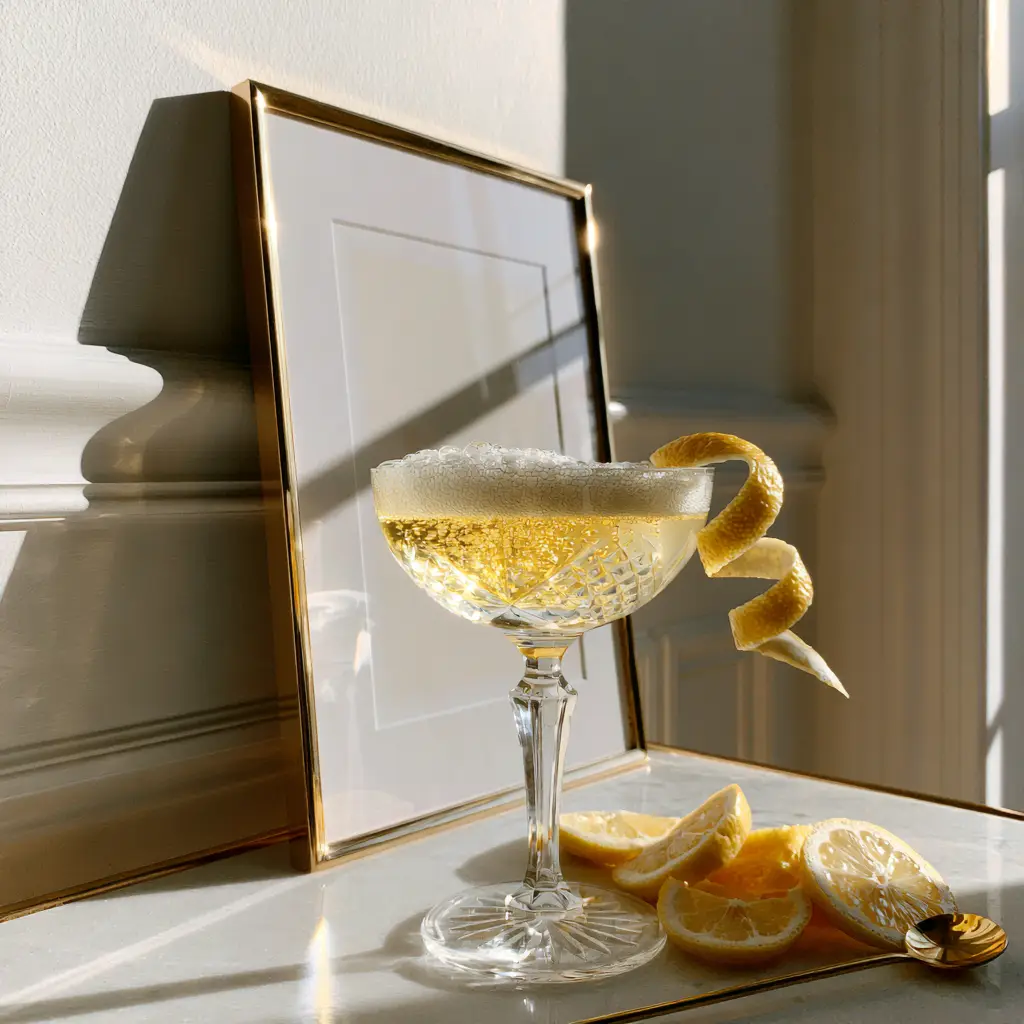
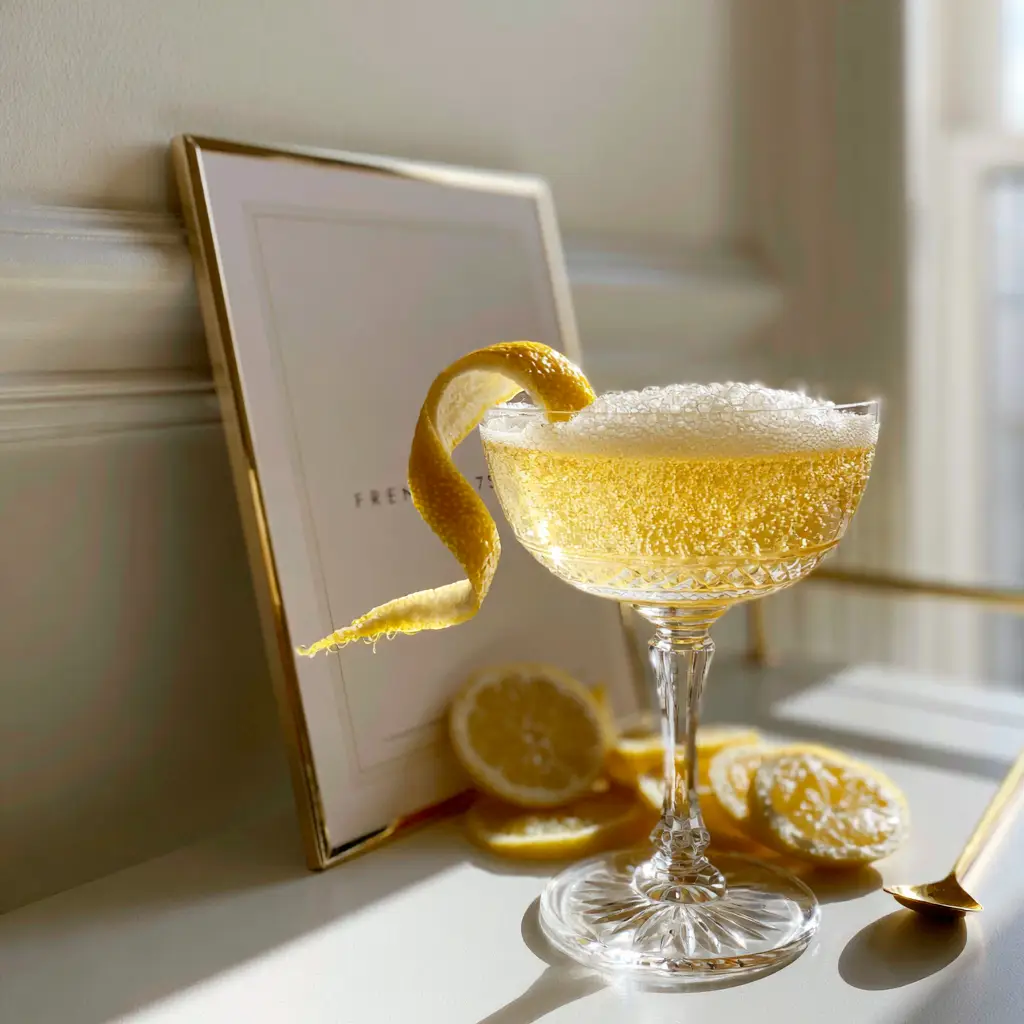
There is something inherently sophisticated about a luxury bar cart setup, especially when it features a minimalist French 75 cocktail print in a thin champagne-gold frame. This classic drink, known for its botanical bite and effervescent finish, is more than just a beverage; it is a visual statement of elegance.
Whether you are looking to replicate the high-resolution textures of a professional cocktail photo or simply want to master the art of the perfect pour, understanding the balance of gin and bubbles is key. The French 75 cocktail print captures that moment when natural daylight hits crystalline condensation on a vintage coupe, creating a scene that is both timeless and modern.
In this guide, we will break down the exact science of building this cocktail so your real-life results mirror the golden, micro-bubbled perfection seen in our visual blueprint. From the oils-spritzing lemon twist to the thick head of golden champagne, every detail matters for both taste and presentation.
Why This Visual French 75 Recipe Works
- Effervescent Texture: By using specific pouring techniques, we achieve a thick head of golden bubbles that stays active in the glass.
- Botanical Balance: The contrast between clear London dry gin and fresh, cloudy lemon juice provides a complex flavor profile that isn’t overly sweet.
- Cinematic Garnishing: The long, elegant lemon zest spiral is designed to spritz essential oils across the surface for an immediate sensory impact.
- Temperature Control: We focus on creating that signature crystalline condensation that makes the drink look as refreshing as it tastes.
Botanicals and Bubbles: The Essential Components
London Dry Gin: You need 1.5 oz (45ml) of a high-quality, clear London dry gin to provide a structural botanical backbone without adding unwanted color. It should be crisp and juniper-forward to stand up against the acidity of the citrus.
Fresh Cloudy Lemon Juice: Use 0.75 oz (22ml) of freshly squeezed lemon juice; the slight cloudiness adds a realistic, artisanal texture to the base layer of the drink. Avoid bottled juice, as it lacks the vibrant enzymes needed for that “bright” daylight flavor.
Golden Champagne: You will need 2 oz (60ml) of chilled Brut Champagne to create the micro-bubbles and golden hue described in the French 75 cocktail print. The dryness of a Brut ensures the drink remains sophisticated rather than cloying.
Simple Syrup: 0.5 oz (15ml) of 1:1 simple syrup is the “invisible” ingredient that balances the sharp lemon and gin, ensuring the drink is smooth on the palate. Without this, the acidity would be too aggressive for a luxury presentation.
Large Lemon for Zesting: A fresh, thick-skinned lemon is required to create that long, elegant spiral twist. The skin contains the oils that will be spritzed over the rim to mimic the high-resolution textures of our visual prompt.
Tools for a Luxury Bar Cart Presentation
To achieve the look of a professional French 75 cocktail print, you need a vintage crystal coupe glass. The wide brim allows the golden effervescence to spread, while the crystal facets catch the light and highlight the condensation.
A stainless steel cocktail shaker is essential for aerating the gin and lemon base, ensuring it is ice-cold before the champagne is added. You will also need a sharp channel knife or a vegetable peeler to achieve that specific “long spiral” garnish look.
Finally, a small gold cocktail spoon is useful for a single, gentle stir. This ensures the layers incorporate slightly without deflating the micro-bubbles that are central to the drink’s visual appeal.
Step-by-Step Evolution of a Classic French 75
Chilling the Crystal Coupe
Begin by filling your vintage crystal coupe with crushed ice and water to chill the glass thoroughly. This step is non-negotiable for creating the crystalline condensation that defines the French 75 cocktail print aesthetic.
Shaking the Botanical Base
In a cocktail shaker, combine the clear gin, cloudy lemon juice, and simple syrup with a handful of ice. Shake vigorously for exactly 12 seconds; you will know it is ready when the outside of the shaker feels frost-bitten and cold.
Creating the Golden Layers
Discard the ice from your coupe and strain the gin mixture into the bottom of the glass. Slowly top with the golden champagne, pouring against the side of the glass to maintain the thick head of micro-bubbles.
The Oils-Spritzing Lemon Twist
Hold a long lemon zest spiral over the glass and give it a firm twist to express the oils. You should see tiny droplets landing on the surface of the golden bubbles before draping the spiral elegantly over the rim.
Expert Tips for Bar-Quality Success
- Cold Ingredients are Crucial: Ensure your champagne and gin are stored in the refrigerator; a warm French 75 will lose its carbonation almost instantly.
- The “Cloudy” Secret: Do not over-filter your lemon juice; those tiny particles of pulp help catch the light and provide the “cloudy” look required for the French 75 cocktail print.
- The Double Strain: Use a fine-mesh strainer when pouring from the shaker to ensure no ice shards disrupt the smooth, clear base layer.
- Frame the Scene: If you are setting this up on a white marble bar cart, place a few scattered lemon slices nearby to add organic shapes and color contrast to the composition.
Serving Suggestions and Pairings
This cocktail is the perfect aperitif for a sophisticated dinner party. If you are serving a full spread, it pairs beautifully with light appetizers like ricotta stuffed peppers or a vibrant viral cucumber salad.
For those who prefer a bit of contrast, the crisp acidity of the drink cuts through the richness of savory potato side dishes. If you are hosting a brunch, try serving it alongside healthy food options to keep the morning feeling light and luxurious.
Frequently Asked Questions
Yes, a dry Cava or Prosecco can be used, but a Brut Champagne is recommended to achieve the specific golden micro-bubbles described in the visual blueprint.
Use a fresh, thick-skinned lemon. Hold the zest skin-side down over the drink and give it a sharp, firm pinch to express the essential oils across the surface of the bubbles.
While a flute is traditional, a vintage crystal coupe glass is preferred for a luxury aesthetic as it showcases the condensation and allows for a wider head of golden bubbles.
Ensure your champagne is opened just before pouring and that your gin base is thoroughly chilled. Pouring the champagne slowly against the side of the glass helps maintain carbonation.
London dry gin is clear and juniper-forward, providing a crisp botanical base that doesn’t muddy the cloudy lemon juice or the golden champagne layers.
The Signature French 75 Recipe Card
French 75 Cocktail Print: The Ultimate Guide to an Aesthetic Champagne Classic
Ingredients
Equipment
Method
- Fill a vintage crystal coupe with ice and water to create crystalline condensation while you prepare the drink.
- Add gin, lemon juice, and simple syrup to a shaker with ice. Shake for 12 seconds until a frost forms on the outside.
- Strain the mixture into the chilled glass. Slowly top with golden champagne to create a thick head of effervescent bubbles.
- Twist a long lemon spiral over the glass to spritz oils, then drape it elegantly over the rim of the glass.
Notes
Ensure the champagne is ice-cold to maintain the micro-bubbles for longer duration.
Mastering the Luxury Aesthetic
The beauty of the French 75 cocktail print lies in its minimalist elegance and attention to detail. By focusing on the quality of your bubbles and the precision of your garnish, you can turn a simple drink into a work of art that belongs on a white wainscoted wall.
We would love to see your luxury bar cart setups and how you’ve styled your crystal coupe glasses. Share your photos with us and join our community of aesthetic enthusiasts!
For more inspiration, follow our Pinterest page and stay updated with our latest culinary designs. Don’t forget to leave a comment below if you’ve mastered the golden micro-bubble pour!