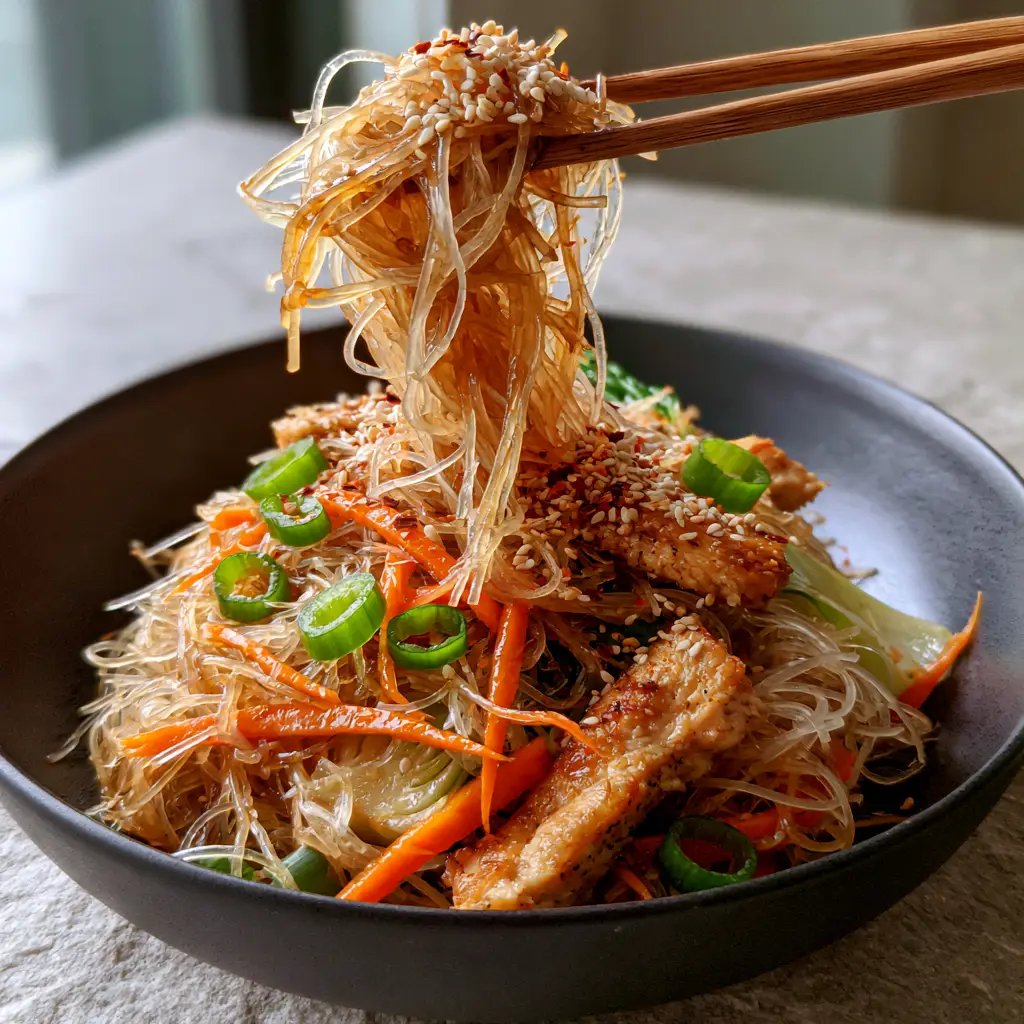
There is a specific magic that happens when ultra-thin, translucent rice vermicelli hits a scorching hot wok. The way the noodles absorb the savory, amber soy-ginger glaze while maintaining their distinct, delicate texture is a hallmark of a truly professional Chicken Mei Fun. If you have ever scrolled through social media and stopped at a macro photo of a glistening noodle pull, you know exactly the sensory experience we are aiming for today.
This recipe captures the essence of Cantonese-style home cooking, featuring golden-seared strips of chicken breast and vibrant, crisp-tender vegetables. We are moving beyond the standard takeout container and into a world where every bite offers a perfect balance of umami, heat, and crunch. The result is a mountain of noodles that are light yet satisfying, served in a way that highlights the natural beauty of fresh julienned carrots and wilted bok choy.
Whether you are looking to expand your repertoire of vibrant bowl recipes or simply craving a restaurant-quality meal at home, this guide will walk you through the culinary forensics of the perfect stir-fry. From the specific soaking time required for translucent noodles to the exact moment to add your toasted sesame seeds, no detail is left to chance.
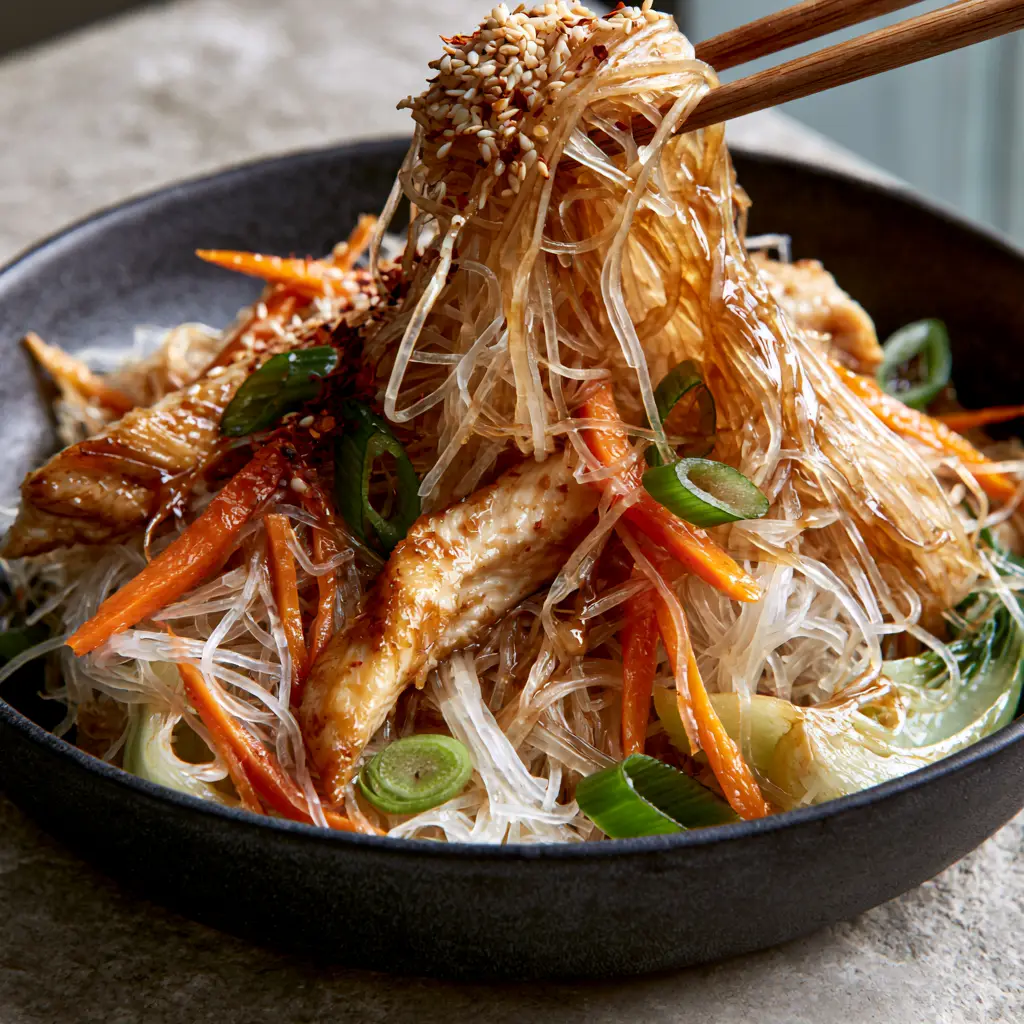
The Visual Anatomy of a Perfect Noodle Stir-Fry
- Translucent Texture: The rice vermicelli must be hydrated perfectly—never mushy—to ensure every strand remains distinct and glistening under the light.
- Golden-Seared Protein: Instead of boiled or poached meat, we focus on high-heat searing to create a deep golden crust on the chicken breast strips.
- Vibrant Color Contrast: The deep orange of julienned carrots and the bright, crisp green of scallion rounds provide a visual pop against a matte-black serving bowl.
- Amber Gloss: A refined soy-ginger glaze coats the dish, providing a reflective, professional finish that screams “chef-quality.”
- Textural Garnishes: A heavy dusting of toasted white sesame seeds and fine red chili flakes adds both visual intrigue and a layer of nutty, spicy complexity.
Essential Components for the Perfect Glossy Glaze
To achieve the specific visual blueprint of this Chicken Mei Fun, we must look at the foundational ingredients that provide both flavor and structure. Each element plays a role in the final architecture of the dish.
Dried Rice Vermicelli (Mei Fun): You will need 8 oz (227g) of these ultra-thin noodles. They are the backbone of the dish, providing that translucent, almost ethereal quality once properly hydrated.
Chicken Breast: 1 lb (454g) of chicken breast, sliced into thin, uniform strips. Thin slicing is critical for rapid searing, which ensures the meat stays juicy while developing a golden-brown exterior.
Bok Choy: 2 cups (150g) of thinly sliced pale green bok choy. The stalks provide a necessary crunch, while the leaves wilt down into the noodles to absorb the ginger-soy sauce.
Julienned Carrots: 1 cup (128g) of carrots cut into matchsticks. These add a natural sweetness and a bright orange hue that contrasts beautifully with the green scallions.
The Amber Soy-Ginger Base: A combination of 3 tbsp (45ml) soy sauce, 1 tbsp (15ml) fresh grated ginger, and 1 tsp (5ml) toasted sesame oil. This mixture creates the signature amber hue seen in professional food photography.
Foundational Fats and Seasonings: You will need 2 tbsp (30ml) of a high-smoke point oil (like peanut or grapeseed oil) for the sear, along with 1/2 tsp (3g) of fine sea salt to draw out the flavors of the vegetables.
Aromatic Garnishes: 2 tbsp (18g) toasted white sesame seeds and 1 tsp (2g) dried red chili flakes. These are not just for flavor; they provide the “macro-ready” finish that defines the visual appeal of the dish.
Tools Required for Professional Results
While you can make this in a standard skillet, a carbon steel wok is the preferred vessel for achieving “wok hei” or the breath of the wok. The high walls allow for vigorous tossing, which is essential for achieving the professional noodle pull effect.
A sharp chef’s knife or a mandoline slicer is vital for achieving the uniform julienne on the carrots. Consistency in size ensures that all vegetables cook at the same rate, preventing the bok choy from becoming over-wilted while the carrots are still raw.
Finally, use a pair of long wooden chopsticks or stainless steel tongs for the cooking process. These tools allow you to lift and separate the vermicelli strands, ensuring the amber glaze is distributed evenly without breaking the delicate noodles.
The Secret to Achieving Golden-Seared Chicken and Translucent Noodles
Hydrating the Vermicelli Foundations
Unlike traditional pasta, rice vermicelli should never be boiled on the stove. Place the dried noodles in a large heat-proof bowl and cover them with boiling water. Let them soak for exactly 3 to 5 minutes until they are pliable but still have a slight “snap.”
Drain the noodles immediately and rinse them under cold running water. This stops the cooking process and removes excess surface starch, which is the secret to keeping the strands distinct and preventing a gummy mess during the stir-fry phase.
Mastering the High-Heat Chicken Sear
Pat the chicken strips dry with a paper towel; moisture is the enemy of a golden sear. Heat 1 tbsp (15ml) of oil in your wok until it begins to shimmer and show faint wisps of smoke.
Add the chicken in a single layer, resisting the urge to move it for at least 90 seconds. You are looking for a deep, golden-brown crust to form. Flip and cook for another minute until just opaque, then remove the chicken from the pan to prevent overcooking.
Wok-Frying the Vegetable Medley
Add the remaining oil to the wok and toss in the julienned carrots and bok choy stalks. Stir-fry over high heat for 2 minutes, listening for the aggressive sizzle that indicates the moisture is evaporating and the flavors are intensifying.
Add the sliced scallions and the leafy parts of the bok choy. The bok choy leaves should just begin to wilt, turning a vibrant, dark green, which provides a stunning visual contrast against the orange carrots.
The Final Noodle Integration and Glazing
Return the golden chicken to the wok along with the hydrated noodles. Pour the soy-ginger mixture over the top, using your chopsticks to lift and toss the mountain of noodles continuously.
Watch as the noodles transform from white to a beautiful, glistening amber. The glaze should reduce slightly, clinging to each individual strand without pooling at the bottom of the bowl. This is the hallmark of a well-executed Chicken Mei Fun.
Expert Tips for Success
- Don’t Overcrowd the Pan: If your wok isn’t large enough, sear the chicken in batches. Overcrowding leads to steaming, which prevents that essential golden-brown color.
- The “Dry” Stir-Fry Technique: Ensure your vegetables are as dry as possible before hitting the oil. This helps maintain the “crisp-bright” green scallion rounds described in the visual prompt.
- Noodle Timing: If your noodles are ready before the stir-fry, toss them with a teaspoon of sesame oil to prevent them from sticking together into a clump.
- Balance the Heat: The red chili flakes should be added at the very end as a garnish. This preserves their bright red color and prevents the spice from becoming unpleasantly bitter in the high-heat oil.
Optimal Storage and Reheating Protocols
Chicken Mei Fun is best enjoyed immediately while the noodles are at their most supple. However, if you have leftovers, store them in an airtight container in the refrigerator for up to 3 days. The flavors of the ginger and soy will actually deepen overnight.
To reheat, avoid the microwave if possible, as it can make rice noodles rubbery. Instead, add a splash of water or chicken broth to a skillet and toss the noodles over medium heat until warmed through. This helps re-emulsify the glaze and restores the glossy sheen.
Creative Pairings for a Complete Feast
This dish is a powerhouse on its own, but it pairs beautifully with other textures and flavors. For a refreshing contrast, serve it alongside a crispy cucumber salad dressed in rice vinegar and chili oil.
If you are looking for a more decadent spread, consider starting the meal with some savory stuffed peppers or even a side of crispy potatoes for a fusion-style dinner. Because this recipe is focused on nutritious whole foods, it fits seamlessly into a balanced weekly meal plan.
Frequently Asked Questions
Yes! While this recipe uses red chili flakes as a garnish, you can add Szechuan peppercorns or fresh Thai bird’s eye chilies during the vegetable stir-fry stage for more heat.
No, you should never boil rice vermicelli. Simply soak them in boiling water for 3-5 minutes until tender yet firm to maintain their distinct, translucent structure.
The secret is high heat and a dry surface. Pat the chicken strips dry with paper towels and sear them in a very hot wok without moving them for the first 90 seconds.
Mei Fun uses thin rice vermicelli noodles which are naturally gluten-free and translucent, while Chow Mein typically uses wheat-based egg noodles that are thicker and more opaque.
Noodles clump when they are overcooked or if excess starch isn’t rinsed off. Always rinse soaked noodles in cold water and toss with a drop of sesame oil if not using immediately.
The Ultimate Chicken Mei Fun Recipe Card
Chicken Mei Fun: The Ultimate Glossy Stir-Fried Rice Vermicelli Recipe
Ingredients
Equipment
Method
- Place rice vermicelli in a heat-proof bowl and cover with boiling water for 3-5 minutes until translucent and pliable.
- Drain and rinse with cold water to stop the cooking and prevent sticking.
- Heat oil in a wok and sear chicken strips until a deep golden-brown crust forms. Remove and set aside.
- Stir-fry carrots and bok choy until carrots are crisp-tender and bok choy is slightly wilted.
- Add noodles and chicken back to the wok. Pour in the soy-ginger sauce and toss until noodles are glistening and amber.
Notes
Don't over-soak the noodles or they will break during the stir-fry.
Final Thoughts on the Perfect Noodle Pull
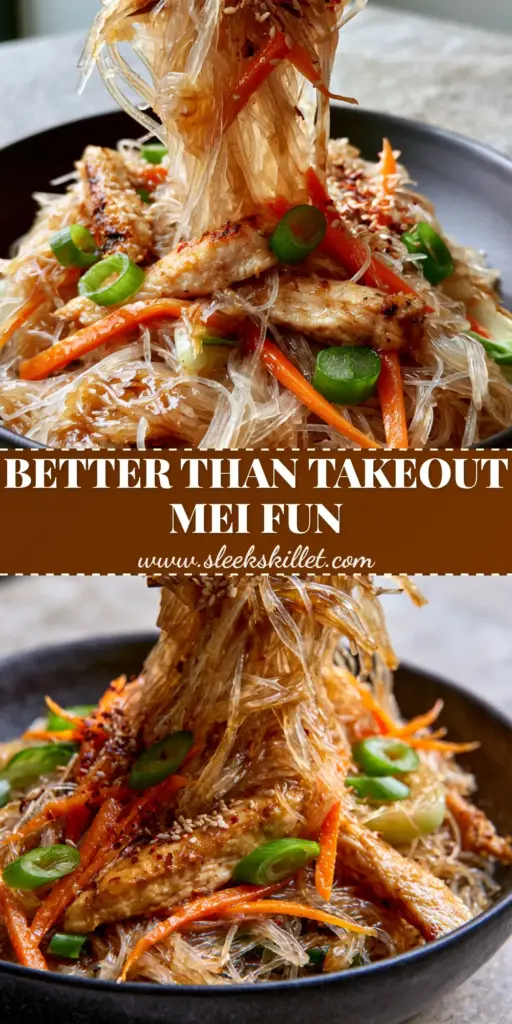
Creating a restaurant-quality Chicken Mei Fun is about more than just following steps; it is about respecting the ingredients and the heat of the pan. By focusing on the golden sear of the chicken and the translucent quality of the vermicelli, you have created a dish that is as visually stunning as it is delicious. We hope this becomes a staple in your kitchen, providing a reliable and impressive option for any night of the week.
If you enjoyed this recipe, please leave a comment below and share your photos with us! Don’t forget to follow our latest culinary adventures on Pinterest for more inspiration and professional tips.