Finding the perfect roasted vegetable recipe is often a journey of trial and error, specifically when trying to avoid the dreaded “soggy floret” syndrome. This specific preparation focuses on a high-heat technique that transforms humble brassicas and root vegetables into a gourmet side dish with a textural profile that rivals any main course.
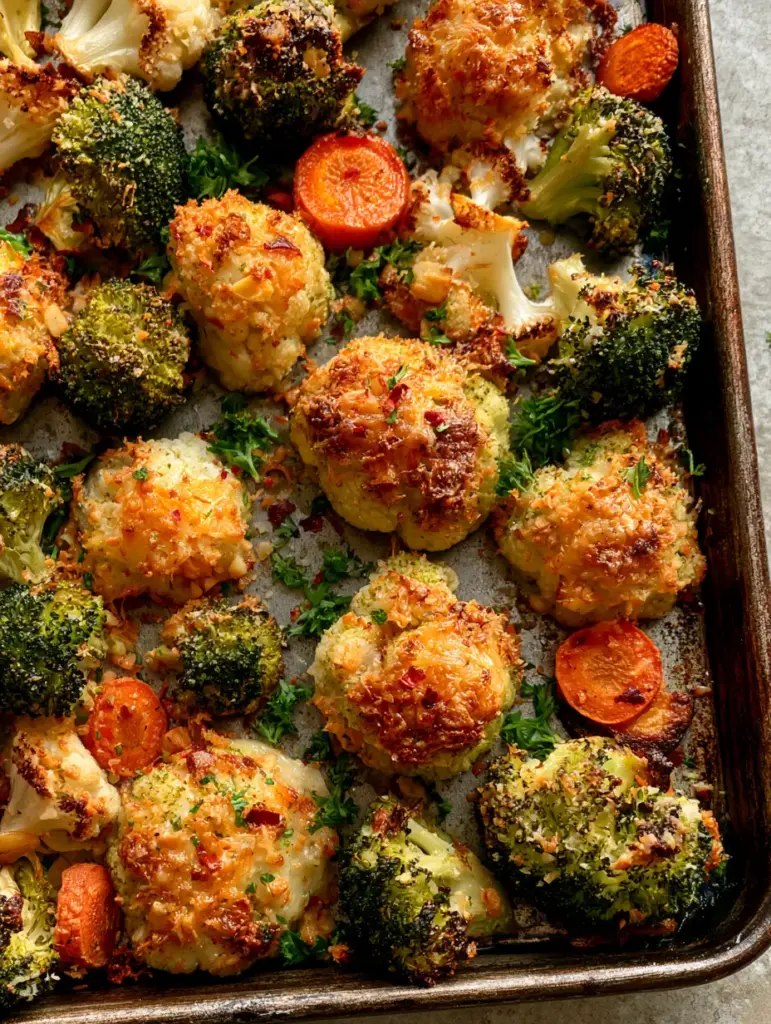
Imagine the contrast of tender, succulent centers hidden beneath a thick, golden-brown, bubbly parmesan cheese crust that provides an incredibly crunchy and shatter-crisp finish. Every bite delivers the nutty aroma of toasted minced garlic and the subtle heat of red pepper flakes, all balanced by the earthy sweetness of caramelized sliced carrots.
Inspired by the rustic aesthetic of a dark metal baking sheet glistening under morning window light, this dish isn’t just a side; it is a masterclass in Maillard-reaction-driven flavor. Whether you are looking for recipe ideas for a weeknight dinner or a holiday feast, this method ensures your vegetables never go unnoticed.
The Science of the Shatter-Crisp Golden Crust
- Extreme Textural Contrast: We achieve a jagged cheese exterior that shatters upon impact, revealing a tender vegetable core.
- Caramelized Complexity: High-heat roasting ensures charred edges on the broccoli and blistered cauliflower for deep, smoky notes.
- Aromatic Infusion: Minced garlic is timed perfectly to toast until golden without turning bitter.
- Visual Vibrancy: The finish of finely chopped fresh parsley and coarse sea salt makes this dish pop against any backdrop.
Essential Components for This Roasted Vegetable Recipe
Every ingredient in this roasted vegetable recipe serves a specific culinary function to ensure the final result matches our high-end food blog aesthetic. We focus on low-moisture vegetables that can withstand the intense heat required for a proper sear.
1 lb (450g) Broccoli Florets: Use fresh broccoli cut into uniform sizes to ensure the edges char at the same rate. The “trees” act as perfect catch-alls for the molten parmesan cheese.
1 lb (450g) Cauliflower Florets: These provide a dense, creamy texture that, when blistered, offers a wonderful nutty flavor profile. Ensure they are completely dry before tossing in oil.
3 large (200g) Carrots: Slicing these on a bias creates more surface area for caramelization. The natural sugars in the carrots balance the salty punch of the parmesan.
1/2 cup (50g) Finely Grated Parmesan Cheese: This is the secret to the crust. Use high-quality, aged parmesan (Parmigiano-Reggiano) for the best “bubbly” results.
3 tbsp (45ml) Extra Virgin Olive Oil: The fat acts as a heat conductor, ensuring the vegetables sear rather than steam. It provides that signature olive oil sheen visible in professional photography.
4 cloves (12g) Fresh Garlic: Minced finely, these bits become “toasted garlic gold” during the final minutes of roasting. Avoid jarred garlic, as it contains too much moisture.
1 tsp (2g) Red Pepper Flakes: These offer a gentle back-end heat that cuts through the richness of the cheese. Adjust to your spice tolerance.
1/2 tsp (3g) Coarse Sea Salt & 1/2 tsp (1g) Cracked Black Pepper: Large grains of salt add a crunchy mineral finish that flakes of table salt simply cannot replicate.
2 tbsp (8g) Fresh Parsley: Finely chopped vibrant green parsley is added at the very end to provide a burst of freshness and color contrast. It’s the perfect finishing touch for healthy foods that look as good as they taste.
High-Performance Kitchen Tools for Roasting
To achieve the results seen in our dark metal baking sheet visuals, you need a heavy-gauge rimmed baking sheet. Thin pans will warp at high temperatures, leading to uneven roasting and hot spots that burn the garlic before the carrots are tender.
A sharp chef’s knife is non-negotiable for achieving those clean, sliced carrot edges and finely minced garlic. Finally, a sturdy metal spatula is required to scrape up every bit of that shatter-crisp cheese crust without breaking it apart.
Mastering the Roast: Step-by-Step Instructions
Preparation and Oven Calibration
Preheat your oven to 425 F (220 C). Position your rack in the center to allow for even airflow around the dark metal baking sheet.
Wash and thoroughly dry the broccoli, cauliflower, and carrots. Any residual water will create steam, which prevents the vegetables from achieving those desired charred edges and blistered skins.
The Seasoning and Coating Process
In a large mixing bowl, combine the broccoli florets, blistered cauliflower pieces, and sliced carrots. Drizzle the olive oil over the top and toss vigorously until every crevice is coated in an olive oil sheen.
Sprinkle with the cracked black pepper and just a pinch of the coarse sea salt. Remember, the parmesan cheese is naturally salty, so we will finish with more salt later.
Achieving the Golden Parmesan Crust
Spread the vegetables onto the baking sheet, ensuring they are spaced out. Crowding the pan is the number one reason a roasted vegetable recipe fails to get crispy.
Roast for 15 minutes. Remove the tray and sprinkle the minced garlic and red pepper flakes over the vegetables. Now, generously shower the entire tray with the finely grated parmesan cheese.
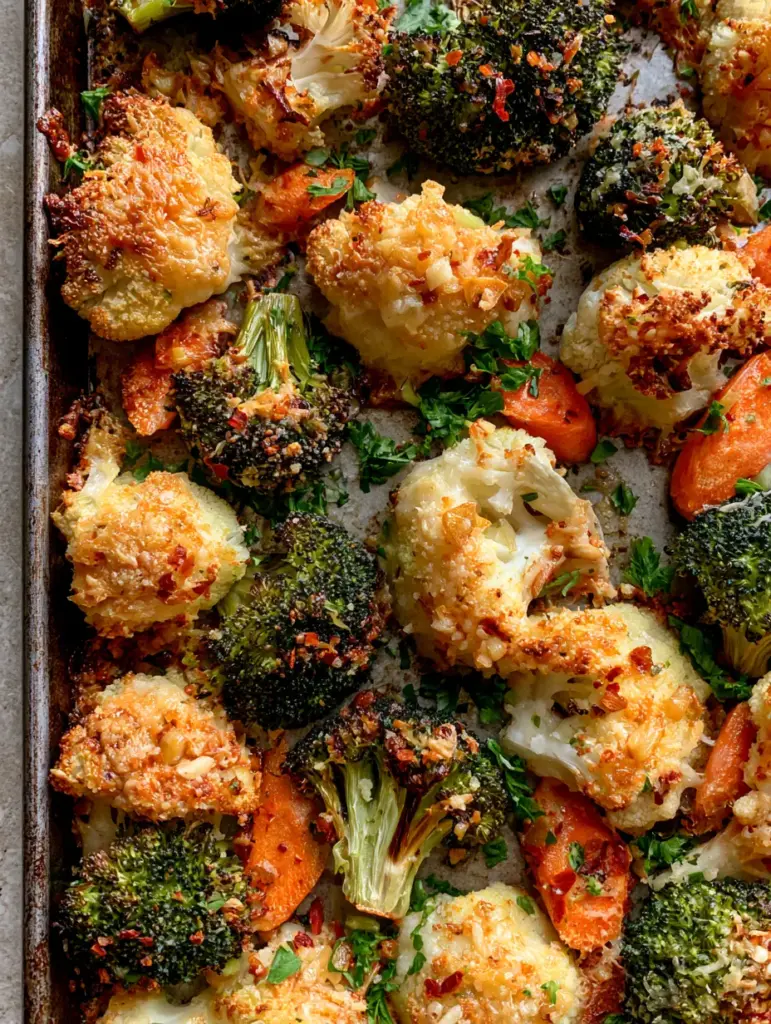
Return to the oven for another 8-10 minutes. Watch for the sensory cues: you should hear the cheese sizzling and see golden-brown bubbles forming across the surface of the florets.
The Final Finish and Garnish
Remove the tray when the cheese looks incredibly crunchy and shatter-crisp. The garlic bits should be a deep toasted gold, not black.
Immediately sprinkle the finely chopped fresh parsley over the hot vegetables. The residual heat will wake up the oils in the parsley, releasing a fresh aroma that perfectly complements the roasted scents.
Expert Tips for Success
- The Drying Phase: If you have time, let your chopped vegetables sit uncovered in the fridge for an hour before roasting to dry out the surface completely.
- Cheese Choice: Use a microplane to grate your parmesan. The light, airy shreds melt and crisp much faster than thick, pre-shredded bag cheese.
- Don’t Flip Too Early: Let the cheese form a structural bond with the vegetable before you attempt to move them. This creates that jagged cheese exterior.
- Oil Balance: If the vegetables look dry halfway through, a quick spritz of oil can help the parmesan adhere and bubble.
Optimizing Shelf Life and Reheating
This roasted vegetable recipe is best enjoyed immediately to preserve the “shatter” of the cheese crust. However, leftovers can be stored in an airtight container in the refrigerator for up to 3 days.
To reheat, avoid the microwave, which will turn the crust rubbery. Instead, place them back on a baking sheet at 400 F (200 C) for 5-7 minutes until the cheese sizzles again. This makes for an excellent salty snack recipe the next day.
What to Serve With These Crispy Vegetables
These vegetables are versatile enough to accompany almost any protein. They pair beautifully with a hearty vegetable lasagna for a plant-forward feast.
If you’re looking for more inspiration, consider serving these alongside other potato side dishes for a texture-rich meal. The sharpness of the parmesan also cuts through the richness of grilled steaks or roasted chicken.
Frequently Asked Questions
You can substitute the parmesan with a vegan nutritional yeast and almond flour blend, though the ‘shatter-crisp’ bubbly texture is unique to real parmesan cheese.
It is not recommended. Pre-shredded cheese is coated in potato starch to prevent clumping, which interferes with the melting process. Finely grate your own for that bubbly, shatter-crisp finish.
Add the minced garlic during the last 8-10 minutes of roasting. This provides enough time to toast it to a golden-brown without the bitterness that comes from overcooking.
A high temperature of 425°F (220°C) is ideal. This high heat triggers the Maillard reaction, creating charred edges and caramelization before the centers become too mushy.
Soggy vegetables are usually caused by overcrowding the pan or residual moisture. Ensure vegetables are completely dry before roasting and space them out so air can circulate.
The Ultimate Roasted Vegetable Recipe
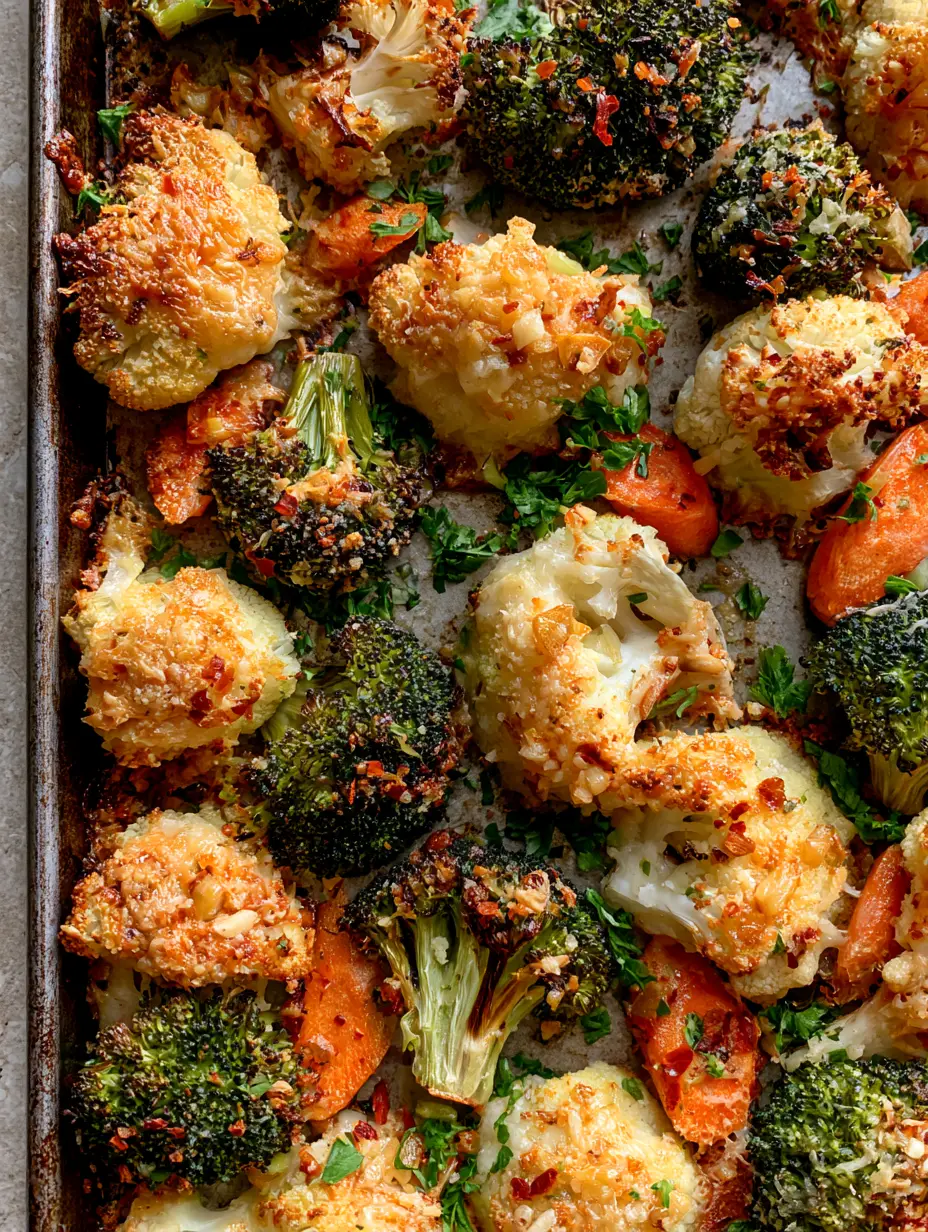
Roasted Vegetable Recipe with a Bubbly Parmesan Shatter-Crust
Ingredients
Equipment
Method
- Preheat oven to 425 F (220 C). Wash and thoroughly dry all vegetables to ensure they roast rather than steam.
- Toss broccoli, cauliflower, and carrots with olive oil, salt, and pepper. Spread on a dark metal baking sheet and roast for 15 minutes until edges begin to char.
- Sprinkle minced garlic, red pepper flakes, and finely grated parmesan over the vegetables. Roast for another 8-10 minutes until the cheese is bubbly and golden-brown.
- Remove from oven and immediately garnish with fresh parsley and an extra pinch of coarse sea salt.
Notes
Use a dark baking sheet to enhance the Maillard reaction.
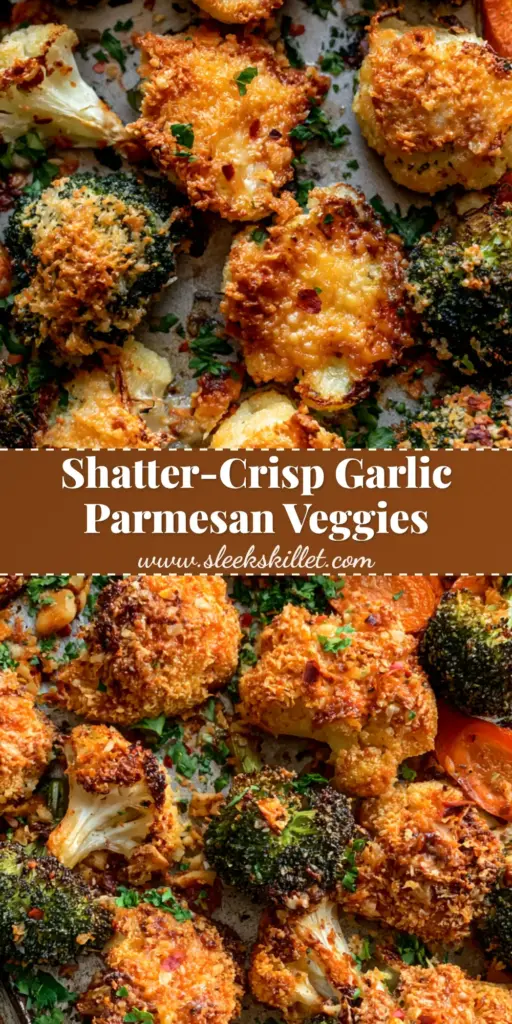
Closing and Culinary Call to Action
Mastering this roasted vegetable recipe is a game-changer for your weekly meal prep and dinner parties alike. The combination of charred broccoli, blistered cauliflower, and that unmistakable parmesan crunch creates a sensory experience that proves vegetables can be the star of the show.
If you enjoyed this recipe, please leave a comment below and let us know how your crust turned out! Don’t forget to share your creations and follow us on Pinterest for more culinary inspiration.