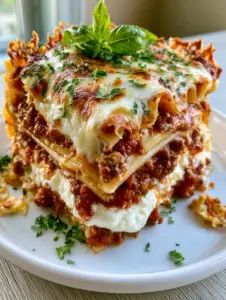
Mastering the perfect vegetable lasagna is often the “white whale” for home cooks. We have all experienced the disappointment of a watery, slumped-over mess that pools at the bottom of the plate, leaving the pasta mushy and the flavors diluted.
This vegetable lasagna is designed to solve that specific culinary frustration. By utilizing professional roasting techniques and a thick, velvety bechamel, we achieve a tall, thick slice that stands perfectly upright with zero liquid pooling.
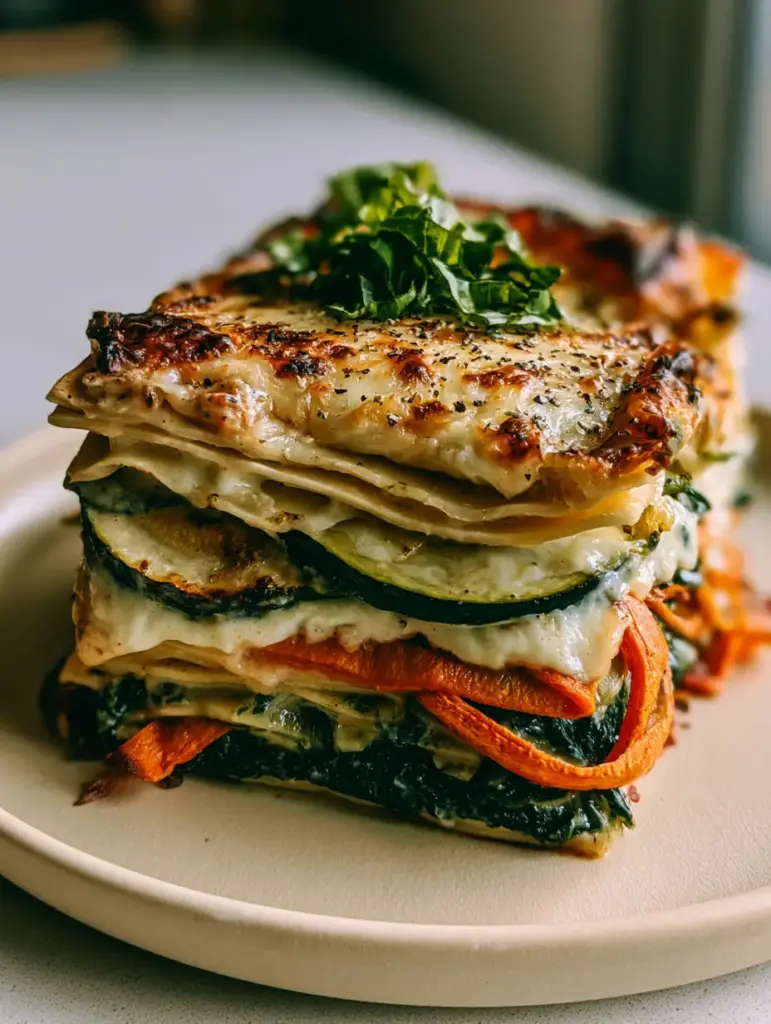
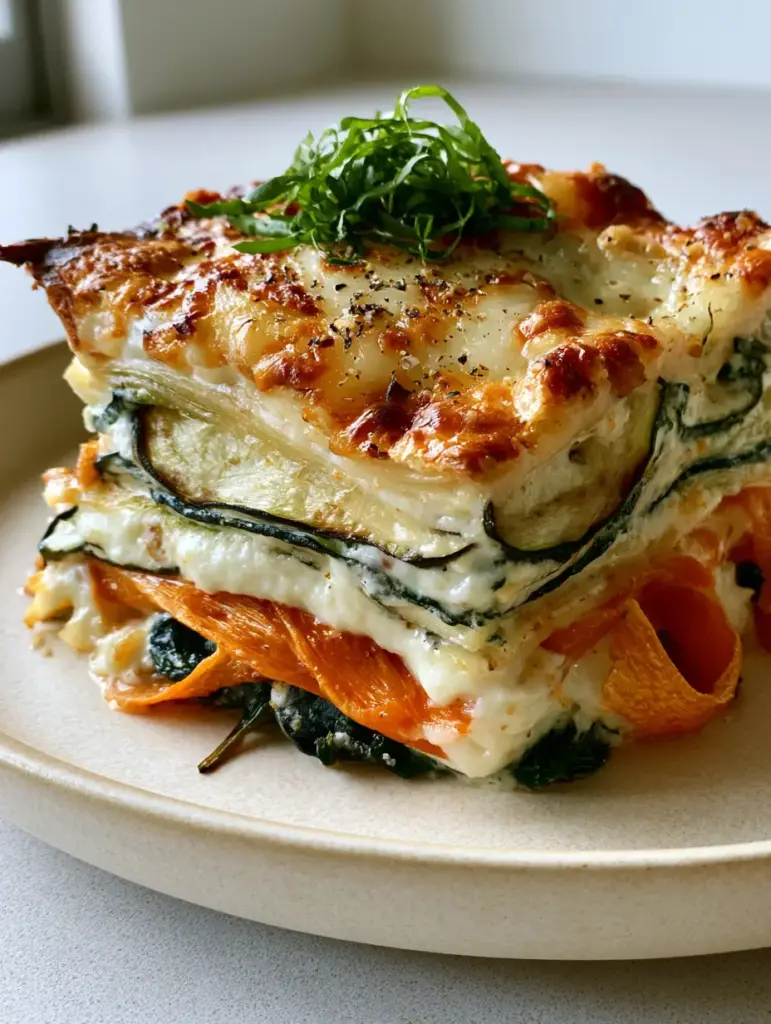
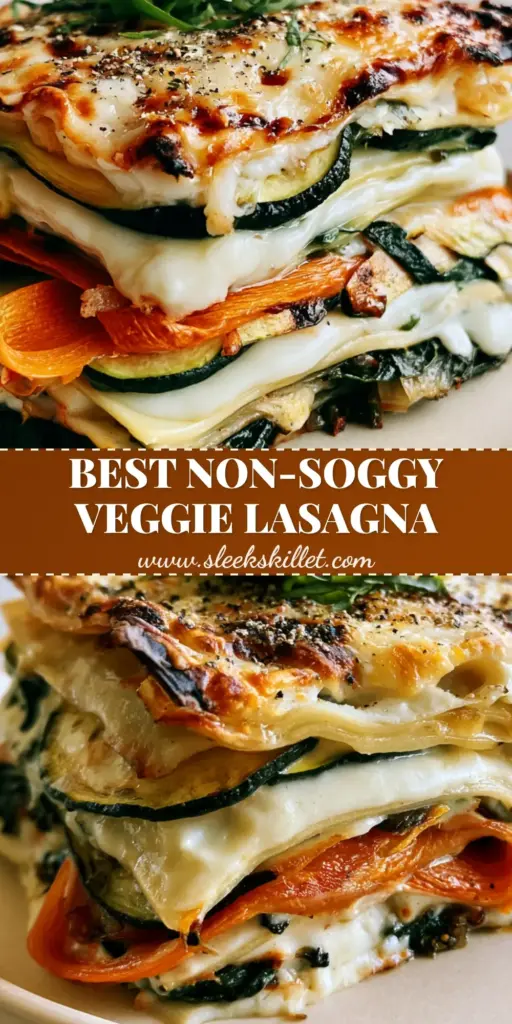
Inspired by high-end trattoria styling, this dish features visible layers of al-dente pasta, charred zucchini, and vibrant orange roasted carrot ribbons. Every bite delivers a symphony of textures, from the silky white sauce to the crispy, golden-brown parmesan crust.
Why This Structurally Sound Vegetable Lasagna Works
- Zero Sogginess: We pre-roast the vegetables to evoke deep caramelization and remove excess moisture before they ever touch the pasta.
- Architectural Integrity: A thick, roux-based bechamel acts as the “culinary mortar” that holds the tall layers together without the graininess of poorly handled ricotta.
- Visual Depth: The contrast between dark leafy spinach, charred zucchini marks, and bright orange carrot ribbons makes this a centerpiece-worthy meal.
- Textural Contrast: A heavy hand with the parmesan and mozzarella creates a toasted, bubbling crust that provides a necessary crunch against the tender interior.
The Anatomy of a Perfect Roasted Vegetable Lasagna
Every ingredient in this vegetable lasagna serves a specific structural and flavor purpose. We aren’t just layering vegetables; we are building a vertical masterpiece that tastes as good as it looks.
Firm Lasagna Sheets: You need high-protein durum wheat pasta sheets to withstand the moisture of the vegetables. While “no-boil” sheets are convenient, par-boiling traditional sheets ensures that perfect al-dente bite.
Zucchini with Char Marks: We slice these into 1/4-inch (6mm) rounds. Searing them until they have distinct grill marks adds a smoky undertone and prevents the lasagna from becoming a “vegetable soup.”
Roasted Carrot Ribbons: Use a peeler to create thin ribbons before roasting. These provide a vibrant orange pop and a natural sweetness that balances the savory parmesan, much like a sweet potato and carrot lasagna profile.
Roasted Red Pepper Strips: These provide a juicy, vinegary tang. Ensure they are roasted and thoroughly patted dry with paper towels to maintain the lasagna’s firm structure.
Wilted Spinach: Fresh baby spinach is sautéed and then—this is the critical part—squeezed by hand until bone-dry. This prevents the dreaded green liquid from bleeding into your white sauce.
Creamy Bechamel Sauce: This is a classic French white sauce made from a butter-and-flour roux and whole milk. It is significantly more stable than ricotta and creates that thick, velvety mouthfeel seen in the best homemade lasagna recipes.
The Cheese Trio: Low-moisture mozzarella provides the stretch, while aged parmesan offers the salty, toasted crust. A hint of nutmeg in the bechamel ties the dairy together beautifully.
Essential Kitchen Tools for Success
To achieve the tall, clean-cut slice shown in our photography, you need the right gear. A standard 9×13 inch (23x33cm) ceramic or glass baking dish is the gold standard for heat distribution.
You will also need two large rimmed baking sheets for roasting the vegetables simultaneously. A heavy-bottomed saucepan is essential for the bechamel to prevent the milk from scorching during the thickening process.
Finally, a sharp offset spatula or a sturdy lasagna turner is required to lift the slice out of the pan without disturbing the pristine layers of your vegetable lasagna.
Step-by-Step Architecture of the Vegetable Lasagna
Prepping the Vegetable Foundation
Start by preheating your oven to 425°F (220°C). Toss your zucchini slices and carrot ribbons in 2 tablespoons (30ml) of extra virgin olive oil and a pinch of salt.
Spread them across the baking sheets in a single layer. Roast for 15-20 minutes, flipping halfway through, until the zucchini shows distinct char marks and the carrots are tender but not mushy.
While the vegetables roast, sauté the spinach in a dry pan until just wilted. Transfer it to a fine-mesh strainer and press firmly with the back of a spoon to remove every drop of moisture.
Crafting the Velvety Bechamel Sauce
In your saucepan, melt 1/2 cup (115g) of unsalted butter over medium heat. Whisk in 1/2 cup (65g) of all-purpose flour and cook for 2 minutes to remove the raw flour taste.
Slowly pour in 4 cups (950ml) of whole milk, whisking constantly to ensure no lumps form. Continue to cook until the sauce is thick enough to coat the back of a spoon—this usually takes about 8-10 minutes.
Remove from heat and stir in 1/2 cup (50g) of grated parmesan, a pinch of nutmeg, and salt to taste. This sauce should be thick, not runny, to ensure the vegetable lasagna stays upright when sliced.
The Art of the Vertical Layer
Spread a thin layer of bechamel at the bottom of your baking dish. Lay down your first set of pasta sheets, slightly overlapping to create a solid base.
Layer half of the charred zucchini and roasted red pepper strips. Top with a generous drizzle of bechamel and a handful of mozzarella.
Add the next layer of pasta, followed by the carrot ribbons and the squeezed-dry spinach. Repeat the bechamel and cheese layer, then top with the final pasta sheets.
Achieving the Golden-Brown Toasted Crust
For the final layer, spread the remaining bechamel all the way to the edges to prevent the pasta from curling. Cover thickly with the remaining mozzarella and a heavy dusting of parmesan.
Bake at 375°F (190°C) for 35-40 minutes. If the top isn’t as golden as the visual prompt, turn on the broiler for the last 2-3 minutes until the cheese is bubbling and has crispy, brown edges.
Expert Tips for a Tall, Perfect Slice
- The 20-Minute Rule: You MUST let the lasagna rest for at least 20 minutes after removing it from the oven. This allows the bechamel to set and the layers to bond, ensuring a clean side profile.
- Check Your Moisture: If your zucchini looks watery after roasting, pat it with a paper towel. Water is the enemy of a sturdy vegetable lasagna.
- Fresh Herb Timing: Only add the fresh basil chiffonade right before serving. The residual heat from the slice will release the basil’s aroma without turning the leaves black.
- Season Every Layer: A common mistake is only seasoning the sauce. Lightly salt the roasted vegetables to ensure flavor depth throughout the entire height of the dish.
What to Serve with This Hearty Dinner
Because this vegetable lasagna is so rich and creamy, it pairs best with bright, acidic side dishes. A viral cucumber salad provides a refreshing crunch that cuts through the bechamel.
If you are looking for a more traditional pairing, consider light potato side dishes or a simple arugula salad with lemon vinaigrette. For those who want a bit of heat, serving this alongside ricotta stuffed peppers creates a beautiful Mediterranean spread.
And of course, no Italian-inspired meal is complete without dessert. A tray of brown sugar chocolate chip cookies is the perfect casual finish to a sophisticated dinner.
Frequently Asked Questions
While you can, bechamel (a flour and milk roux) provides much better structural integrity and a smoother texture. Ricotta can become grainy and release moisture, making the slice more likely to collapse.
For this specific tall structure, par-boiling traditional sheets is recommended. It gives you better control over the texture compared to ‘no-boil’ sheets which can sometimes remain crunchy or absorb too much sauce.
You must let the lasagna rest for at least 20-30 minutes. This ‘setting’ time allows the cheese and sauce to firm up, ensuring the slice stays upright when plated.
The primary cause is the high water content in vegetables like zucchini and spinach. Roasting the vegetables beforehand and squeezing the spinach bone-dry are essential steps to ensure a firm, non-watery lasagna.
The Master Recipe: Structured Roasted Vegetable Lasagna
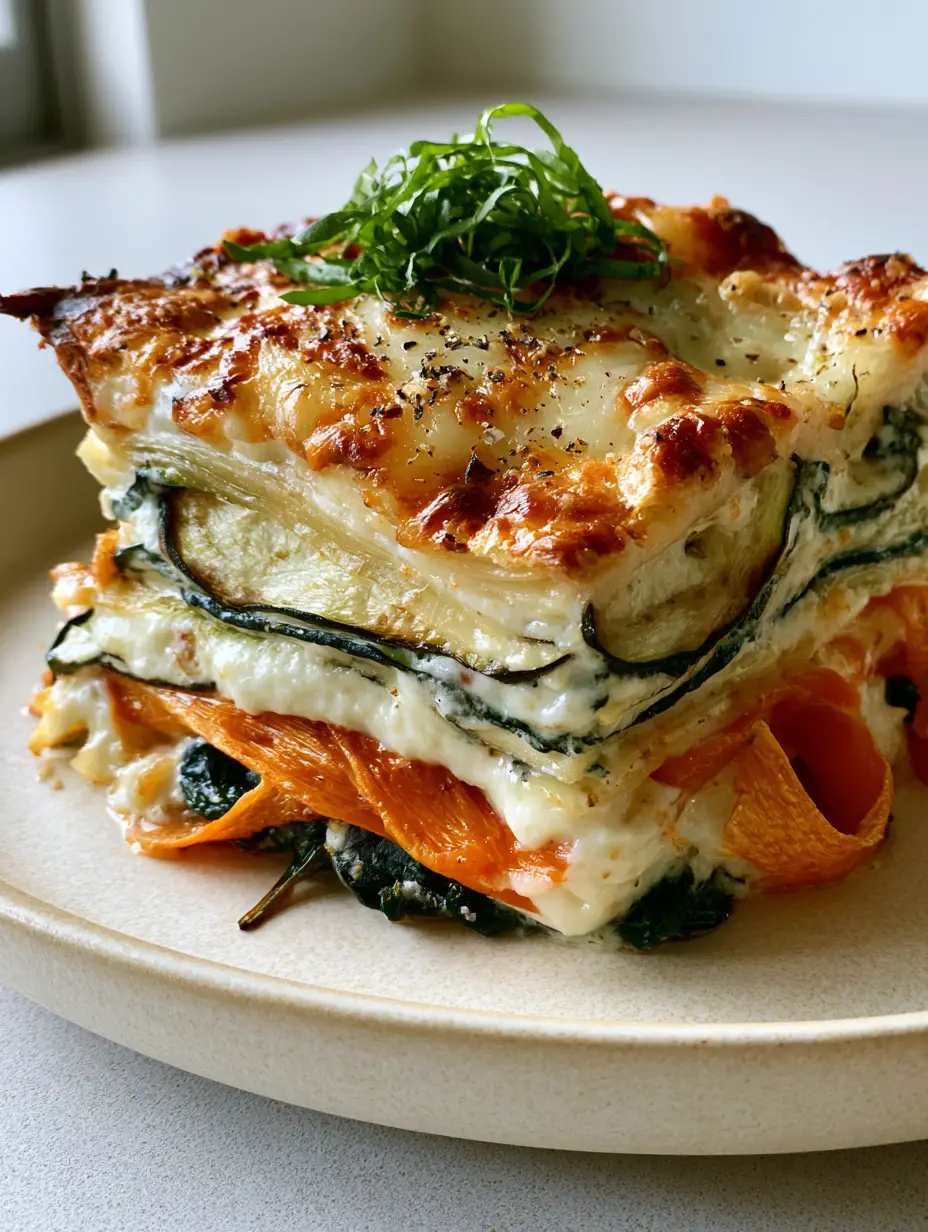
The Ultimate Vegetable Lasagna with Roasted Zucchini and Creamy Bechamel
Ingredients
Equipment
Method
- Toss zucchini and carrot ribbons with oil. Roast at 425°F (220°C) for 20 minutes until char marks appear.
- Wilt spinach in a pan, then squeeze in a kitchen towel until completely dry of all liquid.
- Melt butter, whisk in flour for 2 minutes over medium heat.
- Slowly whisk in milk. Simmer until thick enough to coat a spoon. Stir in half the parmesan and nutmeg.
- Layer sauce, pasta, zucchini/peppers, sauce, cheese. Repeat with pasta, carrots, spinach, sauce, cheese. End with pasta, remaining sauce, and all remaining cheese.
- Bake at 375°F (190°C) for 40 minutes until golden brown and bubbling.
- Rest for 20 minutes before slicing to ensure structural integrity.
Notes
Always rest for 20 minutes before slicing to get a clean upright piece.
Closing & Call to Action
This vegetable lasagna is a testament to the fact that meatless dishes can be just as hearty, structural, and satisfying as their traditional counterparts. By focusing on moisture control and sauce density, you can serve a slice that looks exactly like a professional food photograph.
If you enjoyed building this culinary masterpiece, please leave a comment below and let us know how your layers turned out! Don’t forget to follow us on Pinterest for more visually stunning recipe blueprints.
Share your photos with us by tagging our handle—we love seeing those perfectly upright slices in your own modern kitchens!