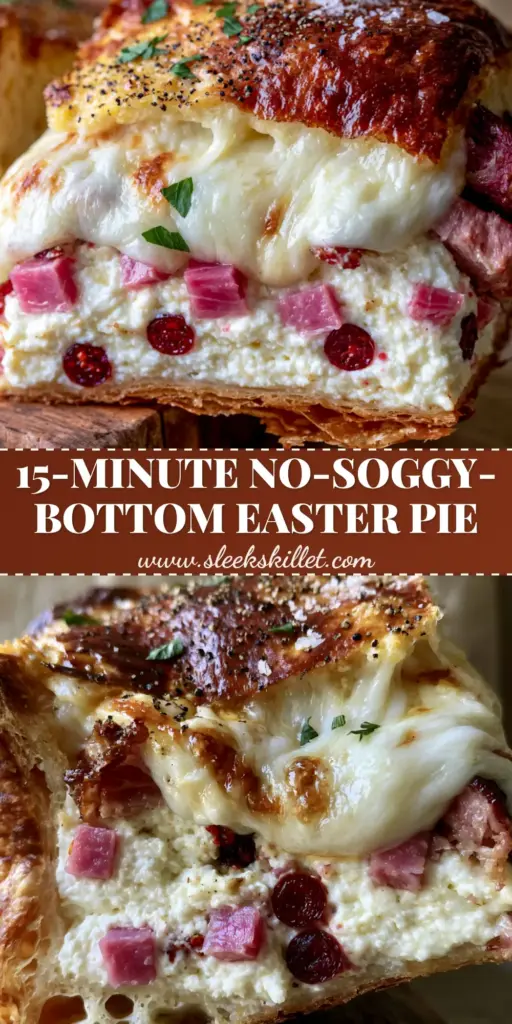
Pizza rustica is the crown jewel of Italian celebratory baking, a towering masterpiece of savory meats and creamy cheeses encased in a shattering, golden-brown crust. Often referred to as Torta Pasqualina or Italian Easter Pie, this dish is a sensory explosion that defines the transition from Lenten fasting to holiday feasting. Our version focuses on an ultra-crispy, flaky puff pastry foundation that perfectly supports a dense, rich filling of whole milk ricotta, salty prosciutto, and a gooey blend of melted mozzarella and sharp provolone.
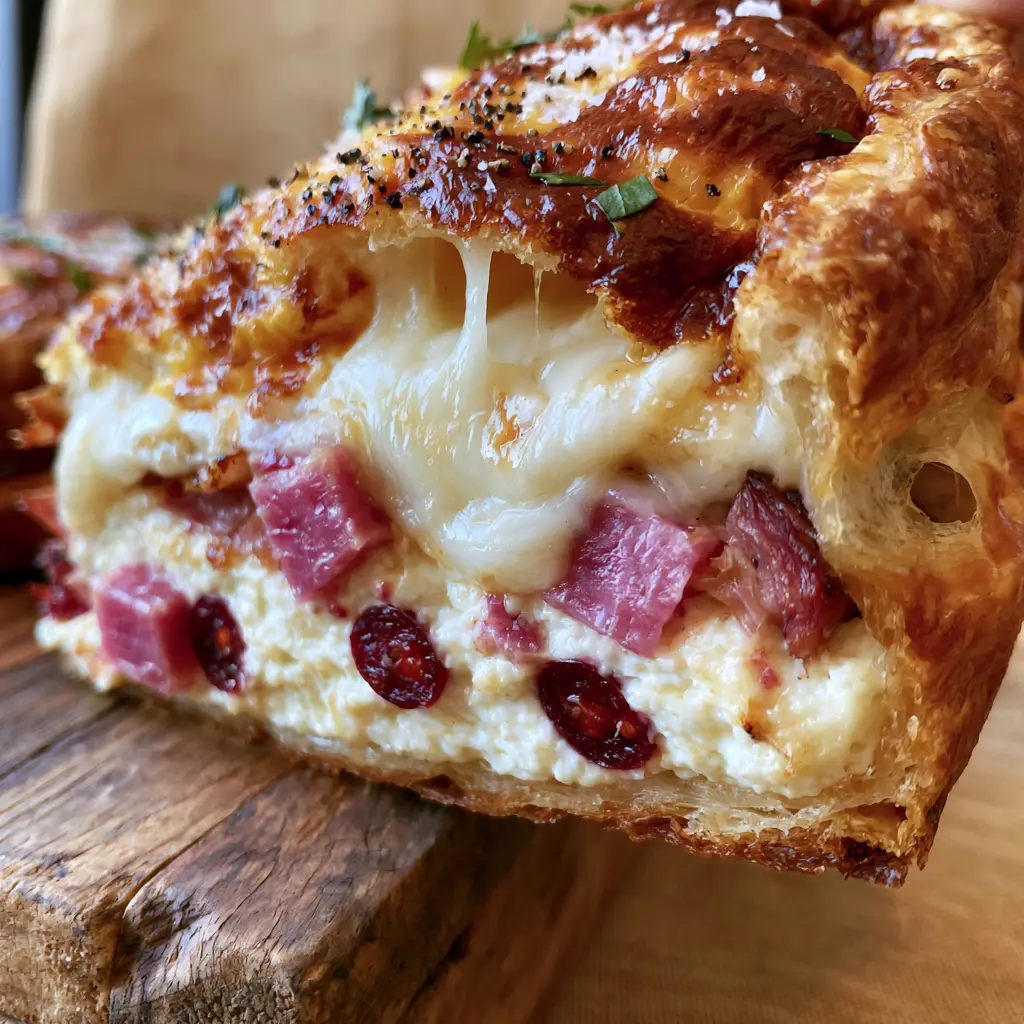
When you lift a slice of this Pizza rustica, you are met with a macro-level cross-section of culinary art. The deep mahogany gold of the egg-washed top crust yields to a thick layer of bubbling cheese, followed by a vibrant mosaic of pink ham, dark red spicy salami, and translucent ribbons of prosciutto. It is a dish designed to be the centerpiece of your table, offering a complex profile of salt, cream, and black pepper heat that lingers on the palate.
Why This Pizza rustica Recipe Works
- Unrivaled Texture: We utilize a specific layering technique to ensure a thin, ultra-crispy bottom crust with visible air pockets, avoiding the “soggy bottom” common in lesser recipes.
- The Meat Trinity: A calculated balance of cubed salty prosciutto, spicy Italian salami, and savory diced ham provides varied salt levels and textures in every bite.
- Superior Cheese Pull: The combination of aged provolone and whole milk mozzarella creates a thick, stretchy pull that mimics the most indulgent comfort foods.
- Pinterest-Perfect Finish: A heavy egg wash and a sprinkle of cracked black pepper ensure a deep mahogany sheen that stops the scroll every time.
If you enjoy exploring savory dough-based dishes, you might also love our guide to Lahm Bi Ajeen, or if you are looking for more vegetable-forward Italian crusts, try this crispy zucchini scarpaccia.
Essential Ingredients for a Traditional Pizza rustica
The secret to a world-class Pizza rustica lies in the quality of the fats and the moisture content of the cheeses. Each ingredient serves a specific structural and flavor-based purpose.
Puff Pastry (2 sheets): We use high-quality puff pastry to achieve those signature flaky layers. It provides a lighter, more modern contrast to the traditionally heavy shortcrust pastry.
Whole Milk Ricotta (15 oz / 425g): This acts as the creamy mortar for our filling. Ensure it is well-drained to keep the filling dense and sliceable rather than watery.
Salty Prosciutto (4 oz / 115g): Cubed rather than sliced, this provides intense bursts of cured saltiness that cut through the richness of the cheese.
Italian Salami (4 oz / 115g): Sliced into half-moons, this adds a peppery, fermented tang and a firmer chew to the interior.
Diced Ham (4 oz / 115g): Provides bulk and a mild, savory sweetness that balances the sharper cured meats.
Mozzarella and Provolone (1 cup / 125g each): This duo provides the “melt factor.” Provolone brings the sharp, aged bite, while mozzarella ensures a smooth, gooey texture.
Large Eggs (4 total): Three eggs bind the ricotta filling, while the fourth is reserved for the heavy egg wash that creates the mahogany finish.
Fresh Flat-Leaf Parsley: A handful of finely chopped parsley adds a necessary herbaceous brightness to the heavy meat and cheese profile.
Seasoning: A generous amount of cracked black pepper and a sprinkle of coarse sea salt on the top crust are essential for that “deli-style” visual appeal.
How to Make Pizza rustica Step-by-Step
1. Preparing the Pastry Foundation
Start by lightly greasing a 9-inch (23cm) springform pan or deep-dish pie plate. Roll out your first sheet of puff pastry on a floured surface until it is large enough to cover the bottom and sides with a slight overhang.
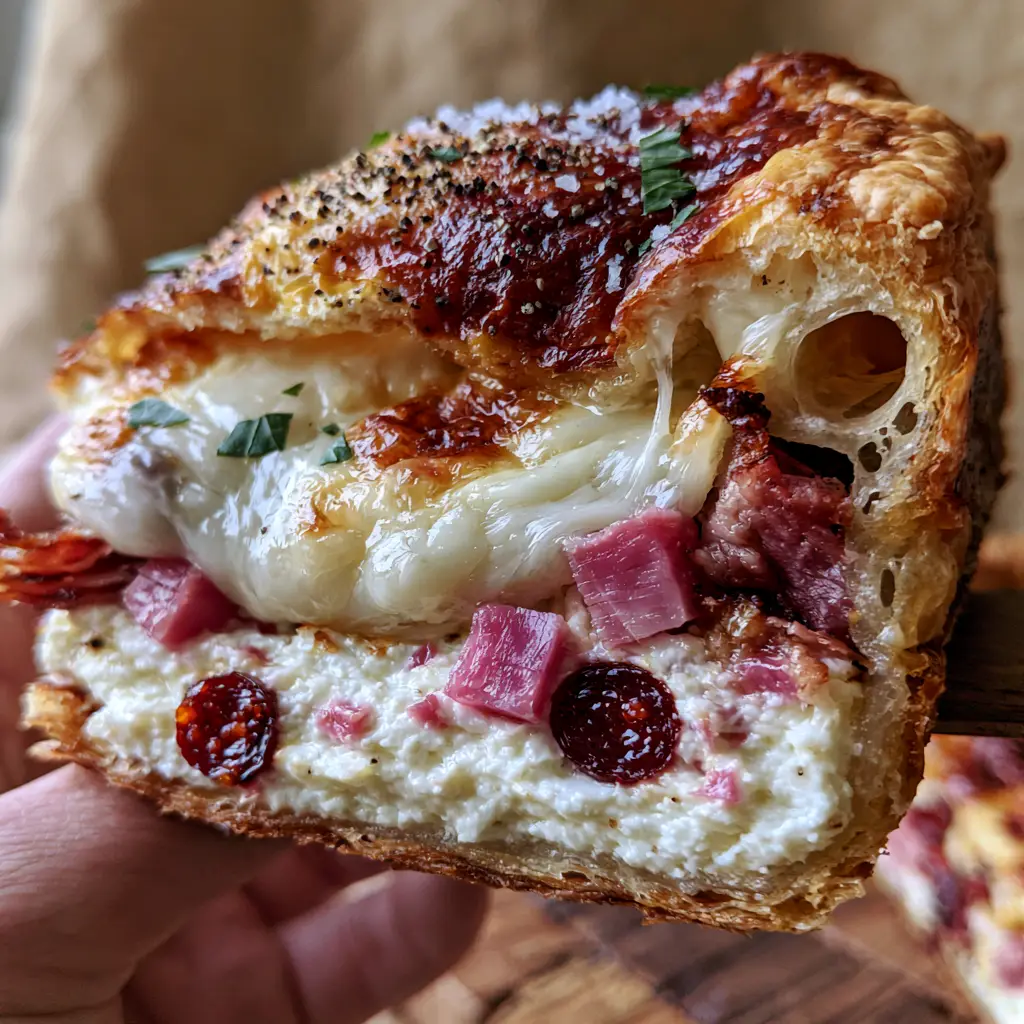
Visual Cue: The pastry should be thin but not translucent. Press it firmly into the corners of the pan to ensure the “visible air pockets” form during baking, creating that ultra-crispy bottom crust.
2. Mixing the Meat and Cheese Filling
In a large mixing bowl, whisk 3 eggs until frothy. Fold in the drained ricotta until smooth. Add the cubed prosciutto, sliced salami, and diced ham. Stir in the shredded mozzarella, provolone, and chopped parsley.
Sensory Cue: The mixture should be thick, pale white, and heavily studded with vibrant pink and red meat chunks. Season heavily with black pepper; the meats are salty, so additional salt inside is usually unnecessary.
3. Assembling the Pie
Pour the filling into the pastry-lined pan, smoothing the top with a spatula. Place the second sheet of puff pastry over the top. Pinch the edges of the bottom and top pastry together to create a tight, rustic seal.
Pro Tip: Use a fork to crimp the edges for a traditional look, or roll them inward for a thicker, crustier border.
4. The Golden Egg Wash Finish
Beat the remaining egg with a teaspoon of water. Using a pastry brush, apply a thick, even layer over the entire top crust. This is what creates the deep mahogany gold finish seen in the photos. Use a sharp knife to cut 3-4 small steam vents in the center.
Sprinkle the top generously with cracked black pepper and a pinch of coarse sea salt. This adds texture and a professional “macro-shot” aesthetic to the finished Pizza rustica.
5. Baking for Maximum Flakiness
Bake at 375°F (190°C) for 45-55 minutes. If the top crust browns too quickly, tent it loosely with foil. You are looking for a deep, golden-brown mahogany color and a filling that feels set when the pan is gently wiggled.
Expert Tips for the Perfect Italian Easter Pie
- Drain the Ricotta: If your ricotta is watery, let it sit in a fine-mesh strainer for 30 minutes. Excess moisture is the enemy of a crispy puff pastry bottom.
- Cold Pastry: Keep your puff pastry as cold as possible until it goes into the oven. This ensures the butter layers remain separate, resulting in a flaky, airy texture.
- Rest Before Slicing: You MUST let the Pizza rustica rest for at least 20-30 minutes before slicing. This allows the cheeses to set, ensuring you get that perfect cross-section slice with the gooey pull.
- Internal Temperature: For perfect food safety and texture, the internal temperature should reach 160°F (71°C).
If you have leftover ham from this recipe, it works beautifully in our savory ham and bean soup.
Storage, Reheating, and Freezing
To Store: Keep leftovers in an airtight container in the refrigerator for up to 4 days. Pizza rustica is one of the few dishes that tastes just as good cold as it does warm.
To Reheat: Avoid the microwave, as it will make the puff pastry soggy. Reheat slices in a 350°F (175°C) oven or air fryer for 5-8 minutes until the crust crisps up and the cheese melts.
To Freeze: Wrap individual slices tightly in plastic wrap and foil. Freeze for up to 3 months. Thaw in the refrigerator overnight before reheating in the oven.
What to Serve With Pizza rustica
Because this dish is incredibly rich and savory, it pairs best with bright, acidic sides. A simple arugula salad with lemon vinaigrette cuts through the fat of the prosciutto and provolone perfectly.
For a full holiday spread, consider serving this alongside a classic 7-layer salad or a tray of deviled egg salad for a lighter appetizer option.
Frequently Asked Questions
Absolutely. You can bake it a day in advance. The flavors actually develop further overnight. Just reheat in the oven for a few minutes to re-crisp the puff pastry before serving.
Yes, you can use a standard shortcrust pie dough. However, puff pastry is recommended for this specific recipe to achieve the light, airy layers and shattering crispy texture seen in the photos.
No! It is traditionally served at room temperature or even cold. This allows the fats in the meats and cheeses to stabilize, making for much cleaner, prettier slices.
While often used interchangeably, Pizza rustica is meat-heavy (prosciutto, salami, ham), whereas a traditional Torta Pasqualina usually features greens like spinach or chard and whole eggs cracked into the filling.
This is usually caused by not draining the ricotta cheese properly. Ensure you strain the ricotta for at least 30 minutes to remove excess whey before mixing with the meats.
The Complete Pizza rustica Recipe Card
Pizza rustica: The Ultimate Flaky Italian Easter Meat Pie
Ingredients
Equipment
Method
- Preheat oven to 375°F (190°C). Roll out one puff pastry sheet and line a 9-inch springform pan, pressing into the edges.
- In a large bowl, combine drained ricotta, 3 eggs, prosciutto, salami, ham, mozzarella, provolone, parsley, and black pepper. Mix until well incorporated.
- Pour the meat and cheese mixture into the pastry-lined pan. Top with the second sheet of puff pastry and crimp edges to seal.
- Brush the top with a beaten egg wash. Sprinkle with extra black pepper and coarse salt. Cut steam vents in the top.
- Bake for 50-60 minutes until the crust is a deep mahogany gold. Let rest for 20 minutes before slicing.
Notes
Use cold puff pastry to ensure maximum flakiness and air pockets.
Join the Toast Pantry Community!
If you made this Pizza rustica, we want to see it! This dish is a labor of love, and nothing makes us happier than seeing your flaky, golden crusts. Please save this recipe to your “Italian Recipes” or “Easter Brunch” board on Pinterest so you never lose it!
Be sure to follow @toastpantry for more high-protein comfort food and holiday showstoppers. Did your cheese pull rival our photos? Leave a 5-star rating and drop a photo of your masterpiece in the comments below!