The Mango Crepe Cake is the ultimate intersection of French pastry technique and tropical indulgence. This breathtaking dessert features 20 paper-thin golden crepes stacked with precision, separated by clouds of stabilized ivory whipped cream and microscopic slivers of sun-ripened mango. If you have ever marveled at the architectural beauty of a professional mille crepe, this guide will show you exactly how to achieve that high-resolution, bakery-style result in your own kitchen.
Imagine a fork gliding through twenty distinct layers, meeting the slight resistance of lacy crepe edges before sinking into a velvety cream center. The experience is heightened by a crowning glory of juicy Manila mango cubes and a glossy, translucent orange nectar drizzle that catches the light. This is not just a cake; it is a sensory event designed for those who appreciate the finer details of culinary craft.
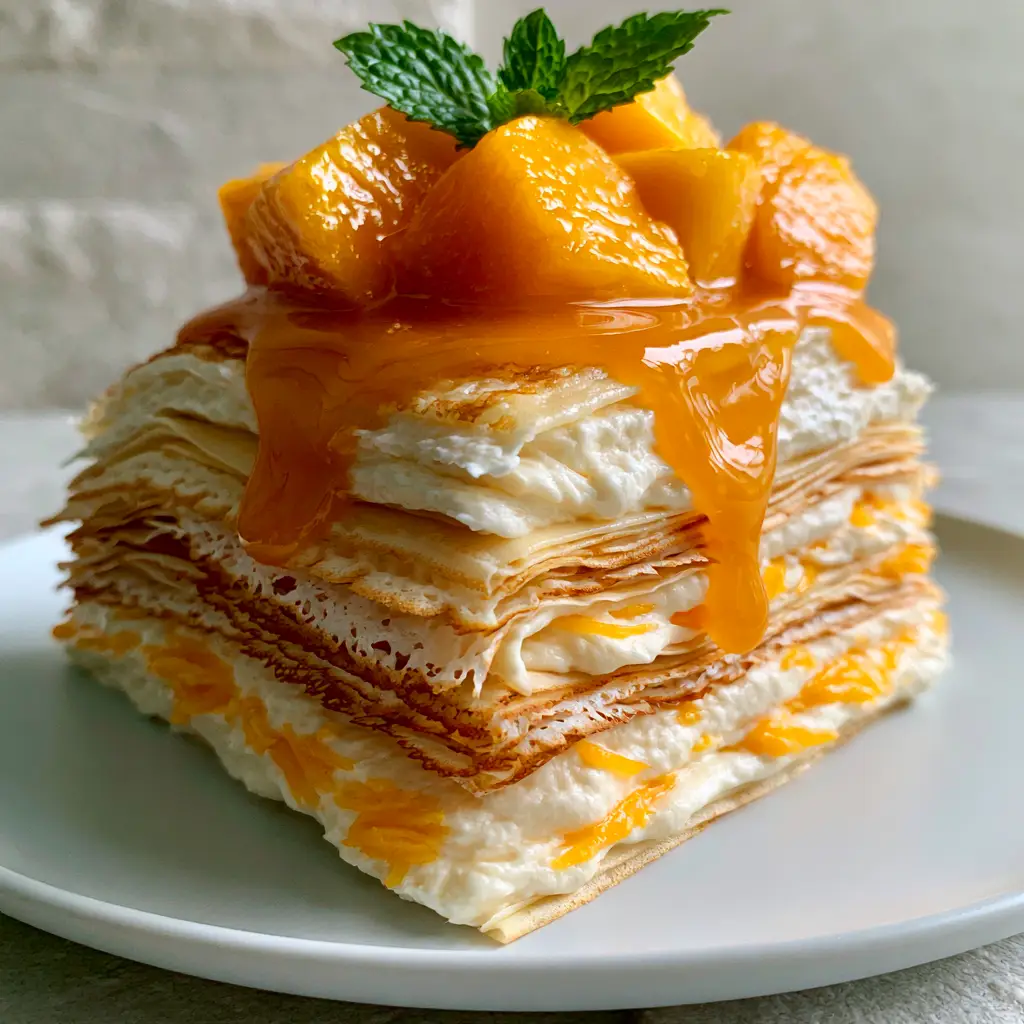
Why This Mango Mille Crepe Is a Showstopper
- Structural Integrity: Using 20 paper-thin layers ensures a stable, sliceable cake that holds its side-profile shape perfectly on a plate.
- Textural Contrast: The combination of tender golden-brown crepes, airy cream, and the snap of fresh mint leaves creates a sophisticated mouthfeel.
- Manila Mango Profile: Specifically utilizing Manila mangoes provides a buttery, fiberless texture that melts into the cream layers.
- Glossy Visuals: A homemade mango coulis drizzle provides that professional, mid-drip aesthetic seen in high-end food photography.
Whether you are preparing this for a summer celebration or looking to master the art of the perfect mango cake, this recipe provides the technical roadmap to success. Let’s dive into the essential components required to build this towering tropical treat.
The Essential Components for Tropical Layers
Creating a Mango Crepe Cake requires a balance of pantry staples and high-quality fresh fruit. Every ingredient serves a specific structural or flavor purpose to ensure the final slice looks exactly like our visual blueprint.
All-Purpose Flour: 2 cups (250g). This provides the necessary gluten structure for crepes that are strong enough to stack but thin enough to be delicate.
Whole Milk: 2.5 cups (600ml). Room temperature milk ensures a smooth, lump-free batter that spreads effortlessly across the pan.
Large Eggs: 4 units. Eggs act as the primary binder and contribute to the “golden-brown” lacy edges described in our visual prompt.
Unsalted Butter: 4 tbsp (56g), melted and cooled. This adds richness and prevents the crepes from sticking to the pan without needing excess oil.
Heavy Whipping Cream: 3 cups (720ml). High-fat cream is essential for creating the “stabilized ivory whipped cream” that stays firm between 20 layers.
Powdered Sugar: 3/4 cup (90g). This sweetens the cream while providing a small amount of cornstarch to help with stabilization.
Unflavored Gelatin: 1 tsp (5g). This is the secret “invisible” ingredient that ensures your 2mm cream layers do not collapse under the weight of the mango.
Fresh Manila Mangoes: 4-5 large fruits. You will need these for three distinct purposes: microscopic interior slivers, large glistening cubes for the top, and a smooth coulis.
Fresh Mint: 1 sprig. A vibrant green garnish that provides the final color contrast against the bright orange mango nectar.
The Baker’s Toolkit for Precision Stacking
To achieve the macro side-profile look of a professional mille crepe, specific tools are non-negotiable. You aren’t just cooking; you are engineering a 20-story edible skyscraper.
A 10-inch (25cm) non-stick crepe pan or skillet is vital for achieving those “slightly lacy edges.” You will also need a small offset spatula to spread the ivory cream into perfectly even 2mm layers. If your layers are uneven, the cake will lean or slide. A blender is recommended for the crepe batter to ensure zero lumps, and a fine-mesh sieve will help you create a “thick, translucent orange mango nectar” by removing any fruit fibers from your coulis.

Phase 1: Engineering the Perfect Golden Crepes
Creating the Silky Batter
In a high-speed blender, combine the flour, milk, eggs, melted butter, and a pinch of salt. Pulse until the mixture is completely homogenous. It is critical to rest this batter in the refrigerator for at least 1 hour. This allows the gluten to relax and the air bubbles to dissipate, ensuring your crepes are “paper-thin” rather than rubbery or hole-filled.
Mastering the Pan Swirl
Heat your non-stick pan over medium-low heat. Lightly brush with butter. Pour approximately 3 tablespoons (45ml) of batter into the center and immediately swirl the pan to coat the bottom in a thin, even circle. Look for the sensory cue: the edges will begin to turn a “golden-brown” and lift slightly from the pan. This indicates it is time to flip. Cook for only 30 seconds on the second side. Repeat this until you have at least 22 crepes (allowing 2 for “practice” mistakes).
Phase 2: Stabilized Ivory Whipped Cream & Mango Preparation
Building a Structural Cream
To achieve the “airy, pale ivory” look that holds its shape, you must stabilize the cream. Bloom 1 tsp (5g) of gelatin in 1 tbsp (15ml) of cold water, then melt it briefly in the microwave. In a chilled bowl, whip the heavy cream and powdered sugar until soft peaks form. Slowly stream in the melted gelatin while continuing to whip until stiff peaks form. The cream should be glossy and firm.
The Microscopic Mango Slicing
For the interior, peel two Manila mangoes. Using a very sharp knife, cut the flesh into “microscopic slivers.” These should be almost translucent. If the mango slices are too thick, the layers of the Mango Crepe Cake will become unstable and slide apart. Reserve the remaining mangoes for the “large, juicy cubes” used as the crown.
Phase 3: The Assembly of 20 Layers
Place one crepe on a matte white plate or a flat cake stand. Use your offset spatula to spread a thin, 2mm layer of the ivory cream. Every three layers, add a sparse layer of the microscopic mango slivers. Ensure the mango is spread flat and doesn’t create bumps. Repeat this process until you have stacked exactly 20 crepes. The final layer should be a crepe, which provides a flat foundation for the toppings.
Once assembled, the cake MUST chill for at least 4 hours, preferably overnight. This “sets” the stabilized cream, allowing you to achieve that clean, macro side-profile cut seen in our visual prompt. If you cut it too early, the cream will squeeze out the sides.
Phase 4: The Finishing Drizzle and Crown
Creating the Mango Nectar Coulis
Puree one mango with 1 tbsp (15ml) of simple syrup. Pass the mixture through a fine-mesh sieve to create a “glossy mango coulis.” It should be thick enough to be “caught mid-drip” down the side of the cake. If it’s too thin, simmer it in a small saucepan for 5 minutes to reduce and thicken the nectar.
The Final Presentation
Just before serving, pile the “large, juicy, glistening cubes” of Manila mango in the center of the top crepe. Artfully drizzle the orange nectar over the cubes, allowing it to trail down the 20 visible layers. Place a single “sprig of vibrant green mint” on top for the classic color pop. This mirrors the handheld smartphone photo aesthetic—fresh, vibrant, and incredibly detailed.
Expert Troubleshooting for Mille Crepe Success
- Crepes are breaking: Your batter might be too thin or the pan isn’t hot enough. Add 1 tbsp (8g) of flour to the batter and ensure the pan “hisses” slightly when the batter hits it.
- Layers are sliding: This usually happens if the cream wasn’t stabilized or the mango slivers were too thick and wet. Always pat your mango slices dry with a paper towel before adding them to the cake.
- The knife drags: To get that perfect “macro side-profile shot,” use a long serrated knife or a very sharp chef’s knife dipped in hot water and wiped dry between every single cut.
- The drizzle is too runny: If your coulis doesn’t hold the “mid-drip” look, stir in a tiny amount of cornstarch slurry and heat until translucent.
Preserving Your Mango Masterpiece
The Mango Crepe Cake is best enjoyed within 24 to 48 hours of assembly. Store the cake in the refrigerator, ideally under a cake dome or a large inverted bowl, to prevent the crepes from drying out. The “slightly lacy edges” are the first part to lose their texture, so airtight storage is key.
We do not recommend freezing this cake. The high water content in the fresh mango slivers and the delicate nature of the whipped cream will cause the layers to become mushy and weep moisture upon thawing. For the best experience, assemble it the day before your event.
What to Serve With Mango Crepe Cake
This tropical dessert pairs beautifully with other light, fruit-forward treats. If you are hosting a brunch, consider serving it alongside fluffy Greek yogurt waffles for a complete spread. For a full mango-themed dessert bar, this cake stands out next to a light mango mousse cake or even a refreshing mango bingsu.
If you prefer a contrast in flavors, try serving a slice after a savory meal of grilled steak kabobs or smoky chicken tinga. The bright acidity of the mango nectar acts as a perfect palate cleanser.
Common Questions About Mango Mille Crepe
Yes, you can cook the crepes up to 2 days in advance. Store them stacked with parchment paper in between, wrapped tightly in plastic wrap in the refrigerator.
While a dedicated crepe pan helps achieve those lacy edges, any high-quality 10-inch non-stick skillet will work as long as you can swirl the batter quickly.
Use a sharp serrated knife or a chef’s knife dipped in hot water and wiped dry between every cut. Slice in one smooth motion without pressing down too hard.
The key is using stabilized whipped cream with gelatin and ensure your mango slivers are microscopic and patted dry. Chilling the cake for at least 4 hours before slicing is essential for structural integrity.
Manila mangoes (also known as Ataulfo) are preferred because they are fiberless and buttery. This allows them to blend into the cream layers without creating a stringy texture.
The Ultimate Mango Crepe Cake Recipe
Mango Crepe Cake: A 20-Layer Tropical Mille Crepe Masterpiece
Ingredients
Equipment
Method
- Blend flour, milk, eggs, and butter until smooth. Rest in the fridge for 1 hour.
- Cook 3 tbsp of batter in a hot pan for 60 seconds per side until golden-brown lacy edges form. Repeat 20-22 times.
- Whip heavy cream with powdered sugar and melted gelatin until stiff peaks form.
- Layer crepes with 2mm of cream and microscopic mango slivers every 3 layers. Stack 20 crepes high. Chill for 4 hours.
- Top with cubed mangoes, mango nectar drizzle, and fresh mint.
Notes
Use a hot knife to slice through the layers without squishing the cream.

Start Your 20-Layer Journey Today
The Mango Crepe Cake is a testament to the beauty of patience and precision. While stacking 20 layers might seem daunting, the visual reward of that first sliced profile is unparalleled. The golden crepes, the ivory cream, and the vibrant Manila mangoes create a harmony of flavors that will impress even the most discerning home cooks.
Did you master the 2mm cream layer? We want to see your results! Leave a comment below, share your photos, and be sure to follow us on Pinterest for more tropical dessert inspiration. Don’t forget to pin this recipe to your “Dream Desserts” board!