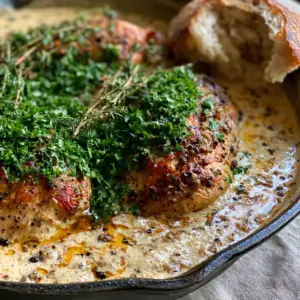
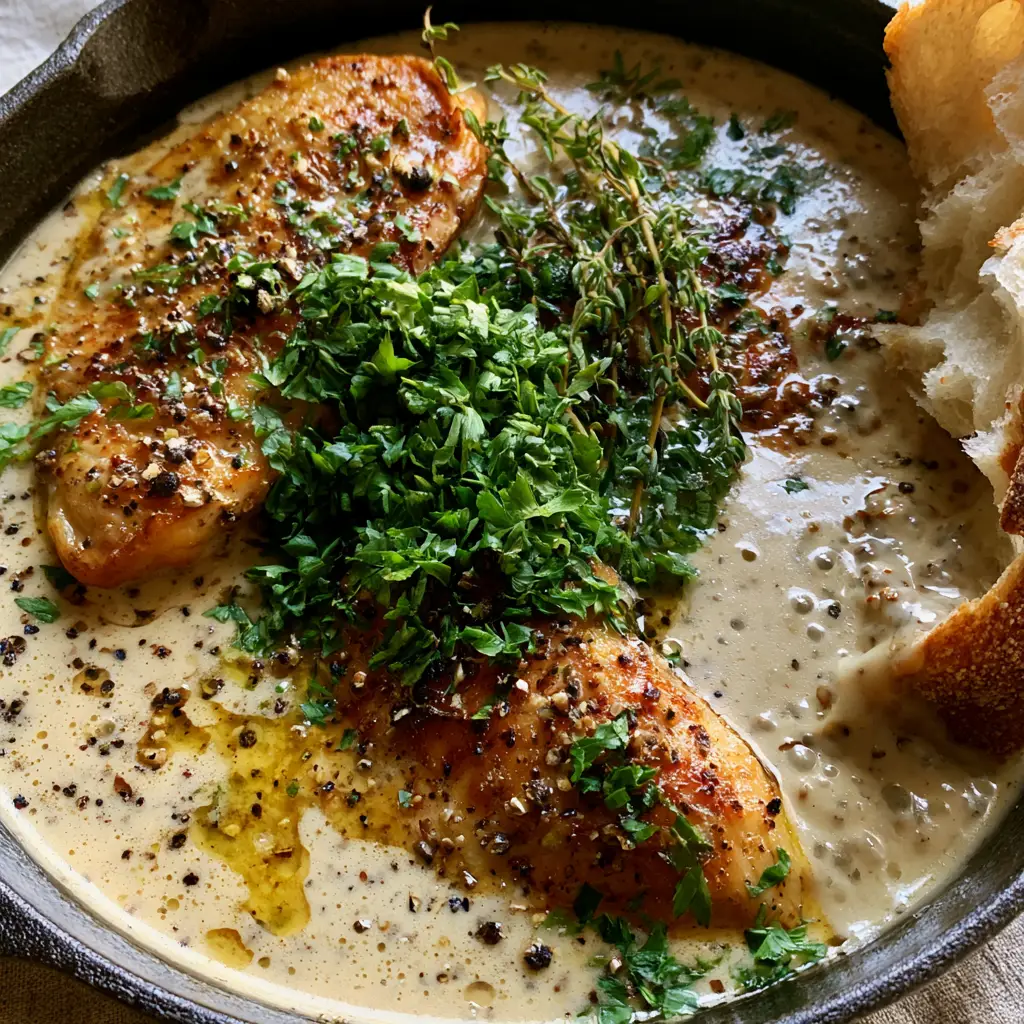
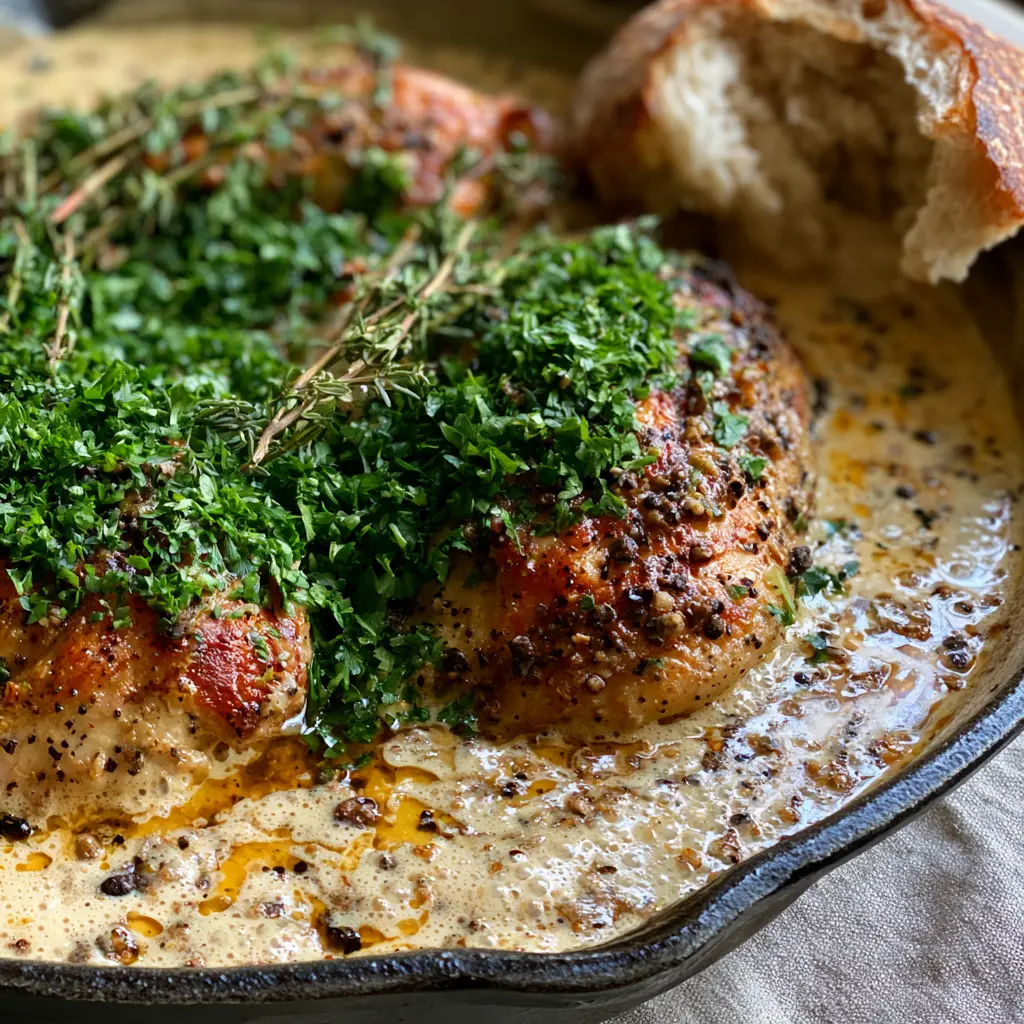
There is something inherently romantic and sophisticated about a Chicken au poivre sizzling in a rustic cast iron skillet. As the soft natural daylight hits the kitchen counter, the sight of golden-brown pan-seared chicken breasts nestled in a thick, glossy, cream-colored peppercorn sauce is enough to make any home cook feel like a classically trained chef. This isn’t just a meal; it is a sensory experience defined by the sharp aroma of cracked peppercorns and the earthy fragrance of fresh thyme sprigs.
In this recipe, we take the traditional French technique and adapt it for a handheld, smartphone-photo-worthy dinner that tastes even better than it looks. We focus on achieving that perfect Maillard reaction on the chicken skin while creating a velvet sauce so decadent you will want to dip a thick slice of torn, crusty sourdough bread into every single drop. The heavy speckling of coarse black peppercorns provides a bold contrast to the creamy bubbles in the sauce, creating a visual and flavorful masterpiece.
Why This Skillet Chicken au poivre Is a Weeknight Masterpiece
- Visual Texture: The contrast between the deep golden-brown sear of the chicken and the bright green minced parsley creates a restaurant-quality presentation.
- Flavor Complexity: You get the sharp heat of coarse cracked peppercorns balanced perfectly by a rich, velvety cream base and golden pan drippings.
- The “Sourdough Factor”: Unlike other recipes, we explicitly incorporate torn sourdough bread to act as the perfect vehicle for the glossy, thick sauce.
- One-Pan Efficiency: Utilizing a black cast iron skillet ensures even heat distribution and makes for a stunning centerpiece on a neutral linen background.
The Anatomy of a Perfect Peppercorn Sauce: Essential Ingredients
To achieve the specific visual blueprint of this Chicken au poivre, every ingredient serves a dual purpose: structural integrity and aesthetic appeal. We use foundational elements like high-quality fats and fresh aromatics to build a sauce that is thick enough to coat a spoon—or a piece of bread—without being greasy.
Chicken Breasts (6-8 oz / 170-225g each): Choose skin-on if possible for that specific golden-brown visual, or high-quality boneless breasts that can withstand a high-heat sear. The chicken provides the “anchor” for the dish, acting as the landscape for the peppercorns to rest upon.
Whole Black Peppercorns (2 tbsp / 12g): These must be coarsely cracked, not ground into a powder, to ensure the sauce is “heavily speckled” as described. Using a mortar and pestle ensures you get those irregular, rustic fragments that pop against the cream-colored sauce.
Heavy Cream (3/4 cup / 180ml): This is the secret to the “velvety” and “glossy” finish that creates those beautiful creamy bubbles in the skillet. Heavy cream emulsifies with the pan drippings to create a sauce that won’t break under heat.
Cognac or Brandy (2 tbsp / 30ml): While optional, this is the classic deglazing agent that lifts the golden pan drippings (fond) from the skillet floor. It adds a deep, amber complexity that elevates the Chicken au poivre to bistro standards.
Chicken Stock (1/2 cup / 120ml): This provides the liquid base for the sauce to reduce, intensifying the savory notes of the poultry. It ensures the sauce has enough volume to allow for dipping the crusty sourdough bread.
Unsalted Butter (1 tbsp / 15g): Added at the very end (a technique called monter au beurre), this gives the sauce its final glossy sheen. It bridges the gap between the sharp pepper and the mellow cream.
Fresh Thyme and Parsley: The thyme sprigs are cooked within the sauce to infuse earthy oils, while the minced parsley provides the “bright green” visual pop. These herbs are critical for breaking up the neutral tones of the chicken and cream.
Torn Crusty Sourdough: A thick slice of artisanal sourdough is non-negotiable for this recipe. Its open crumb structure is designed to soak up the peppercorn emulsion and golden juices.
Professional Tools for Achieving a Restaurant-Quality Sear
To match the visual prompt’s “rustic black cast iron skillet,” you truly need seasoned cast iron. Cast iron has a high thermal mass, meaning it won’t drop in temperature when you add the cold chicken breasts, ensuring a consistent golden-brown crust.
A heavy-bottomed stainless steel pan is a secondary option, but you will miss out on the specific rustic aesthetic. You will also need a sturdy pair of tongs to flip the chicken without tearing the seared surface, and a small whisk to emulsify the cream into the pan juices.
Mastering the Pan-Sear: A Step-by-Step Culinary Guide
Creating a Chicken au poivre that looks like a handheld smartphone photo requires attention to sensory cues. You aren’t just looking at the clock; you are looking for the “creamy bubbles” and the “deep golden-brown crust.”
Preparing the Chicken and Cracking the Peppercorns
Start by patting your chicken breasts bone-dry with paper towels; moisture is the enemy of a golden sear. Season both sides generously with kosher salt, but hold off on the pepper for a moment. Take your whole peppercorns and crush them coarsely—you want large fragments, not dust.
Press the cracked peppercorns firmly into one side of each chicken breast. This ensures the pepper stays attached to the meat rather than just floating in the sauce, creating that “heavily speckled” look we are aiming for in the final skillet presentation.
Developing the Golden-Brown Crust
Heat 1 tablespoon (15ml) of neutral oil in your cast iron skillet over medium-high heat until it just begins to shimmer. Place the chicken breasts in the pan, pepper-side down first. Leave them alone for 5-6 minutes; resisting the urge to move them is how you achieve the visual texture of the seared skin seen in the prompt.
Once the edges are visibly golden and the chicken releases easily from the pan, flip them. Cook for another 5 minutes until the internal temperature reaches 165°F (74°C). Remove the chicken to a warm plate, but do not wipe out the pan—those golden pan juices are the foundation of your sauce.
Creating the Velvety Peppercorn Emulsion
Lower the heat to medium and add a finely minced shallot to the remaining drippings. Once softened, deglaze the pan with the cognac, scraping the bottom to release all the flavor. Pour in the chicken stock and let it reduce by half.
Now, whisk in the heavy cream and add the fresh thyme sprigs. Let the sauce simmer until it thickens into a thick, glossy, cream-colored consistency. You should see small bubbles forming around the edges of the skillet. Whisk in the cold butter at the last second to achieve that professional shine.
Professional Chef Secrets for the Perfect Glossy Finish
- The Butter Trick: Always use cold butter when finishing the sauce; the slow melt helps create a stable emulsion that looks “velvet” rather than oily.
- Don’t Over-Reduce: If the sauce becomes too thick to dip your sourdough, whisk in a tablespoon of warm water or stock to loosen it back to a “glossy” state.
- Residual Heat: Cast iron retains heat for a long time; remove the skillet from the burner a minute before you think the sauce is done to prevent the cream from breaking.
- Herb Placement: Scatter the fresh minced parsley and extra thyme sprigs only seconds before serving to ensure they remain “bright green” and don’t wilt into a dark mossy color.
Keeping Your Leftovers Fresh: Storage and Reheating Tips
While Chicken au poivre is best enjoyed immediately while the sourdough is fresh and the sauce is bubbly, you can store leftovers in an airtight container for up to 3 days. The sauce will naturally thicken and solidify in the fridge due to the high fat content of the cream and butter.
To reheat, place the chicken and sauce back into a skillet over low heat. Add a splash of chicken stock or milk to reconstitute the velvety texture. Avoid the microwave if possible, as it can cause the chicken to become rubbery and the cream sauce to separate into a greasy mess.
Creating the Perfect French Bistro Spread at Home
This Chicken au poivre is a heavy, rich dish that benefits from contrasting sides. To balance the creamy peppercorn sauce, consider serving a refreshing viral cucumber salad on the side. The acidity of the vinegar cuts through the richness of the heavy cream beautifully.
If you want to lean into the comfort food aspect, you can’t go wrong with more potatoes. Check out these crispy potato side dishes that can soak up any extra golden pan drippings that the sourdough might have missed. For those looking for a lighter pairing, a simple homemade green juice provides a clean, vibrant counterpoint to the decadent black pepper heat.
If you’re in the mood for more poultry-based comfort, our melt-in-your-mouth chicken techniques offer a similar level of tenderness but with a completely different flavor profile. Whatever you choose, make sure you have enough bread!
Common Questions About Making Authentic Chicken au poivre
Yes! While cognac is traditional for deglazing, you can substitute it with extra chicken stock and a teaspoon of Worcestershire sauce to maintain a deep, savory flavor profile.
Absolutely. Chicken thighs work wonderfully and are more forgiving. Just ensure you sear the skin side down first to render the fat and achieve that golden-brown visual.
The key is to pat the chicken completely dry before pressing the cracked peppercorns firmly into the meat. The natural proteins will help the pepper adhere as it sears.
Use a mortar and pestle or the bottom of a heavy skillet to crush them on a cutting board. Avoid a pepper mill, as it usually grinds the pepper too fine for this specific rustic texture.
This usually happens if the heat is too high or the cream is boiled too vigorously. Simmer gently and whisk in cold butter at the very end to stabilize the emulsion.
Bringing the Bistro to Your Kitchen
Mastering Chicken au poivre is a rite of passage for home cooks looking to level up their skillet skills. From the moment you hear the sizzle of the chicken hitting the cast iron to the final dip of torn sourdough into the glossy sauce, this recipe celebrates the beauty of simple, high-quality ingredients handled with care.
Chicken au poivre: The Ultimate Pan-Seared Peppercorn Chicken with Crusty Sourdough
Ingredients
Equipment
Method
- Pat the chicken breasts dry with paper towels. Season both sides with salt, then press the coarsely cracked peppercorns into one side of each breast.
- Heat oil in a cast iron skillet over medium-high heat. Place chicken pepper-side down and sear for 5-6 minutes until golden-brown. Flip and cook for 5 more minutes until internal temperature is 165°F (74°C). Remove chicken and set aside.
- In the same skillet, deglaze with cognac, scraping up the golden pan juices. Add chicken stock and reduce by half. Whisk in heavy cream and thyme sprigs, simmering until the sauce is glossy and thick.
- Whisk in the cold butter until melted. Return chicken to the pan to coat in sauce. Garnish with fresh minced parsley and serve with torn sourdough bread partially dipped into the velvet sauce.
Notes
Always crack whole peppercorns fresh; pre-ground lacks the necessary texture.
Closing & Call to Action
This Chicken au poivre is more than just a recipe; it’s a testament to how professional techniques like pan-searing and deglazing can transform humble chicken breasts into a gourmet feast. The visual appeal of the speckled peppercorns and bright green herbs makes it a perfect candidate for your next dinner party or a cozy date night at home.
Did you achieve that perfect golden-brown crust? We want to hear about it! Leave a comment below and tell us how your velvety sauce turned out. Don’t forget to share your skillet photos with us and follow our Pinterest for more rustic recipe inspiration!